
An opinion on NSF50 (S26) and ASTM F2461 as they develop
By Rolf Huber
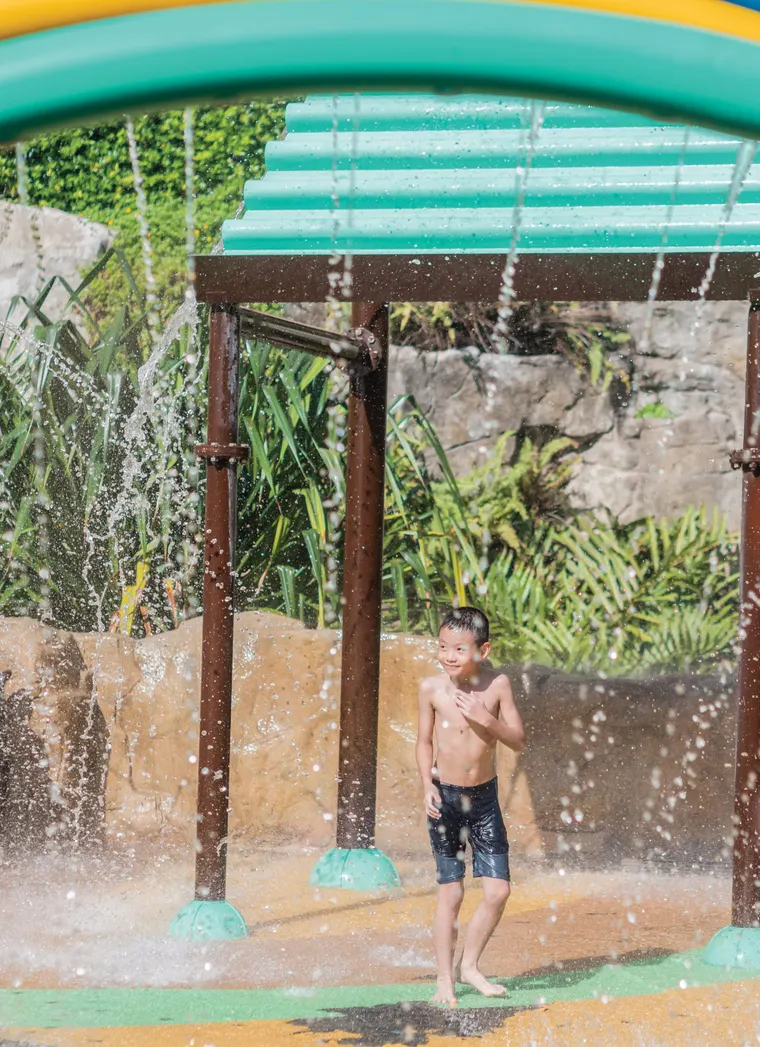
Owners of children’s water features run a full gambit of risks. One of those risks should not have to be contending with apparent mandates to purchase and install surfacing systems that are certified. Owners today are faced with understanding new standards being developed at ISO, revised at ASTM, and terms added to NSF50 in Section 26 (S26). Currently, there are two competing standards—ASTM F2461 and NSF50 Section 26—that are held up for compliance and they are incomplete and under revision. However, that will not stop them from being used when an injury and lawsuit occurs. Designers, specifiers, and owners must be aware of their choices and make intelligent decisions.
Weighing The Risks
At the top of the pyramid are ISO standards that are used worldwide. In the area of sports, recreation, and play, there are standards for drowning prevention in commercial pools, floating inflatables, and benefit/risk assessment. The basis of these standards is to identify intended users and reasonably foreseeable behaviors, as well as to understand there are certain injuries that are an acceptable outcome for an activity, product, or service. In the evaluation process, activities and potential outcomes are evaluated against the probability of a selected injury-severity occurring. In a separate exercise, the benefits of the activity, product, or services are listed, noting that, for some activities, risk taking is a benefit. The key is to determine whether the benefits outweigh the risks, and to move the activity forward. Obviously, regulatory prohibitions stop any project.