
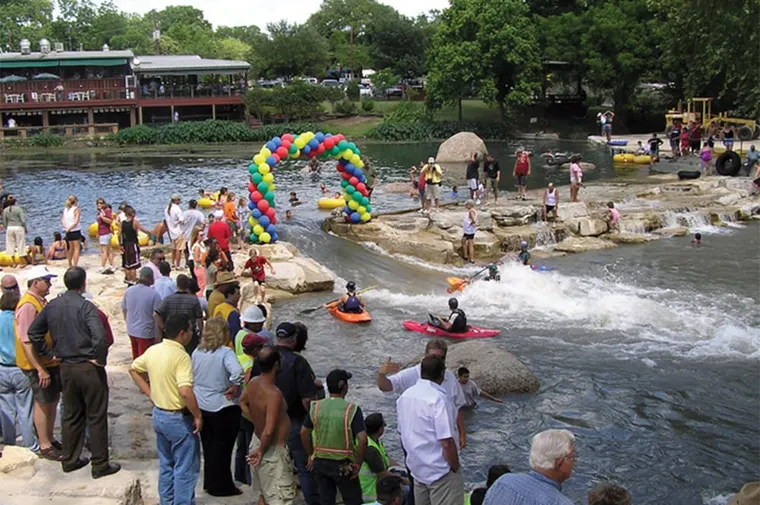
River parks are driving recreation, tourism, stewardship, and community brand value
By Scott Shipley
There is a growing wave of interest among civic leaders, developers, and community groups for well-designed, whitewater-centered river parks to convert under-utilized or inaccessible rivers into treasured assets. With their popular recreational and spectator appeal, river parks are connecting communities to their rivers through better and safer public access—especially when located alongside public parks that include trails, greenways, parking, restrooms, and other amenities. Because they are also delivering significant economic and environmental benefits as well, this trend is expected to swell.
While the design and development of a whitewater park can be complex — requiring a strategic, community-centered approach, as well as a solid financing plan — the process is fairly straightforward. Here’s how to get rowing in the right direction so your community can have one of its own.
What Is A Whitewater Park?
A river park, or whitewater park, is a section of river that has been altered through careful planning and construction to enhance recreational opportunities, riparian zones, and fish habitat, while creating a place for a community to gather, host events, enjoy nature, and more. The river park is built by modifying the riverbed to create hydraulic features, including waves, chutes, eddies, and other features for recreational and commercial kayaking, standup paddleboarding, surfing, and tubing.