Class duration and estimated CEUs
- Duration: 1 hour, 30 seconds (1:00:30)
- Estimated CEU value: 0.10 CEUs (using the common standard of 0.1 CEU per 1.0 contact hour; exact acceptance/rounding varies by accrediting organization).
CLASS DESCRIPTION
This online session equips camp and recreation professionals with practical strategies to design programs that welcome and support participants of all ability levels. Learners will review core concepts of disability inclusion, distinguish between accommodations/modifications and true accessibility through universal design, and explore ADA-related considerations such as reasonable accommodations and disability-friendly communication. The course also provides a high-level overview of common disability characteristics (e.g., physical disabilities, autism spectrum disorder, intellectual disability, sensory impairments, cerebral palsy, traumatic brain injury, and Down syndrome) and translates these insights into actionable program design tools. Participants will leave with a framework of universal programming elements—including structure, schedules, behavior expectations, transitions, consistency, choices, adaptability, communication, instruction, activity selection, and engagement—to reduce barriers, increase participation, and create safer, more successful camp and recreation experiences for everyone.
Learning objectives
By the end of this session, participants will be able to:
- Define disability inclusion in the context of recreation and camp programming and explain why inclusion requires both access and meaningful participation.
- Differentiate accommodations/modifications from accessibility, and describe how universal design/universal programming supports proactive access for all participants.
- Identify common characteristics and support needs associated with at least four disability categories discussed (e.g., ASD, physical disabilities, intellectual disability, sensory impairments, CP, TBI, Down syndrome).
- Apply universal programming elements (e.g., structure/schedule, expectations, transitions, consistency, choices, communication/instruction, activity selection, engagement) to improve participant success and reduce incidents.
- Use respectful interaction practices (people-first/identity-first language awareness, direct communication, promoting independence, and age-appropriate engagement) when supporting participants with disabilities.
ABOUT THE PRESENTER
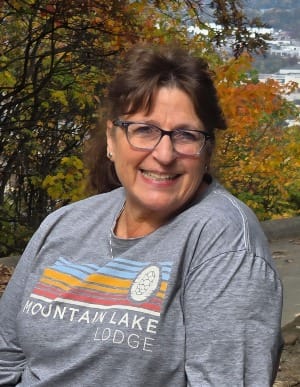
Kathy Williams, CTRS, works with the City of Virginia Beach Parks and Recreation, she is the Recreation Supervisor of Therapeutic Recreation Programs and Inclusion Services. She has worked with the department since 1985. She is a 1987 graduate of Virginia Wesleyan College. She is an active in professional organizations including Virginia Recreation and Parks Society, Southeast Recreation Therapy Symposium Board of Directors. She spent 25 years serving on Virginia Cooperative Extension Leadership Council and working in Virginia Cooperative Extension 4-H Summer Camp Programs. Her passion for the field of Therapeutic Recreation comes in seeing the participants she works with succeed, be it a new experience such as surfing, a great day at summer camp or comradery among the participants in a group fitness program.