
Unknown Lands

Unknown Lands

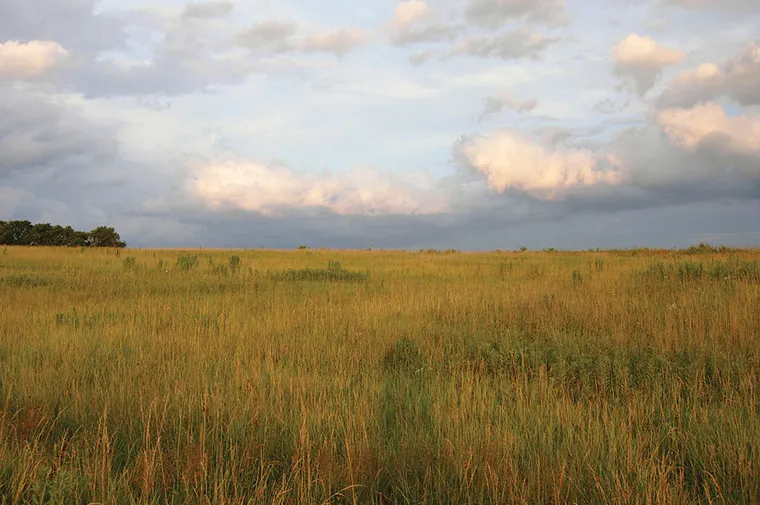
I don’t know what a prairie looks like, yet I spent years living in the Midwest. But neither do you, even if you’re reading this, from the Midwest, right now. In fact, no one knows what a prairie really looks like because it has long been gone.

4 min read

Midewin Tallgrass Prairie offers a new blueprint for conservation


I don’t know what a prairie looks like, yet I spent years living in the Midwest. But neither do you, even if you’re reading this, from the Midwest, right now. In fact, no one knows what a prairie really looks like because it has long been gone.

Gerald Heinrich also mourned for something long lost as a young kid growing up in proximity to the Joliet Arsenal in Elwood, Ill. The Arsenal opened in 1940 to manufacture ammunition and explosives for the U.S. military in World War II. Prior to that, the plains were home to small, agrarian communities with numerous small farmers. Every square mile, there were two to three families, Heinrich says, and prior to 1800, the land was “very much unsettled” by Europeans. At that junction, numerous Indigenous tribes had continuously settled or passed through the land for over 12,000 years. Over time, there were agricultural villages established in the region to till and cultivate the dense, dark soil beneath the tall, swaying tallgrasses.
But with new European settlers came plows, and with the passage of time, more and more people. That was the beginning of the end of the iconic tallgrass prairie.

Yet over the decades, a strange twist of fate occurred: The Arsenal announced in the 1970s that it was closing and annexing away some of its 23,000+ acres. Heinrich saw a golden opportunity: What if even some of that 30 square miles of property could rewind a few hundred years, and eventually become a native prairie once again? 

“This was a great thing to try to promote in 1993, and it was basically in my backyard,” he says. “I wanted to see the open space retained.”

That’s what makes the Midewin Grasslands Prairie so unique today: It’s not a restoration project, but a re-creation one on the original land. It’s always a challenge to conserve land instead of developing it, but there are ways to get both policymakers and the public on your side for the long haul. The following are some tactics to explore. 


Photo: Gerald Heinrich

Develop Coalitions

In 1993, after the U.S. Army announced that it was selling the property that is now Midewin, two groups came together: advocates for a new tallgrass prairie and environmental groups. There are likely already organizations in a state or region that would advocate for a conservation cause if they were aware, so make those connections.

When the Midewin project first gained steam, about 12 groups worked together, Heinrich says. That ballooned to 40 groups by 1996, all of which worked to promote and lobby congresspeople to designate Midewin as a protected territory. The coalition was ultimately successful in 1997 when the Army transferred arsenal lands to the U.S. Forest Service, and the Midewin National Tallgrass Prairie was successfully created for future preservation.


Learn About Native Species

The original footprint of bison prior to European settlement spanned from Georgia to Mexico and up north into Canada. The Midwest was the heart of their territory throughout the Great Plains. Midewin wasn’t intended to attract bison when it opened, but over time, advocacy efforts ramped up to reintroduce the species to the land and observe how the native grasses and birds responded.

“It became an experiment,” Heinrich says. “Do bison promote the prairie, or hurt it?”

A 1,000-acre site was chosen for its unique topography, soil, and emptiness to reintroduce 27 bison onto the property, including 23 cows and four bulls. Since then, baby cinnamon-colored calves have been born that keep the herd growing. One finding so far is that bison are exceptional at eating and controlling invasive species, especially grasses. There is even a camera that the public can access to watch the herd’s activities throughout the day.

Part of going out on a limb and working towards conservation is dreaming big about what a space could be. Research the history of an area and think through how native species could be reintroduced to the land in the future, including predators.


Engage The Kids

Heinrich is resolute that the first step of convincing the public to preserve and protect any natural area is convincing them of what the landscape truly represents. For example, the current aesthetic of the Midwest is not wild tallgrass prairie, far from it. No one has ever seen a true tallgrass prairie, and sometimes it can be challenging to convince people to support something they’ve never seen and don’t know.

“You have to convince people who have never seen a true prairie how interesting and dynamic the birds and animals specific to it are out there,” he says. “When you’re talking prairie, you’ve got to convince people that this is worth saving.” 

Henrich says one immense challenge to continuing restoration projects like Midewin is engaging younger people, especially when their time and attention are constantly absorbed by online stimuli. It’s inherently different from older generations, who played outside constantly as children and developed a love of the outdoors. Some younger kids and adults may not have that, so it’s the job of parks and recreation departments to engage people and cultivate that lifelong appreciation early to turn those children into adult advocates.

Heinrich helped organize the founding of the area, and even he isn’t sure if it’s possible to bring the real prairie back. There are invasive weeds constantly vying for survival, but local advocates are doing the best they can. It is a long game—it may take 10, 20, 100 years to restore Midewin to its original look from the European settlement.

“It’s not going to happen overnight,” he says. “The next generation will have to carry on our work.”