
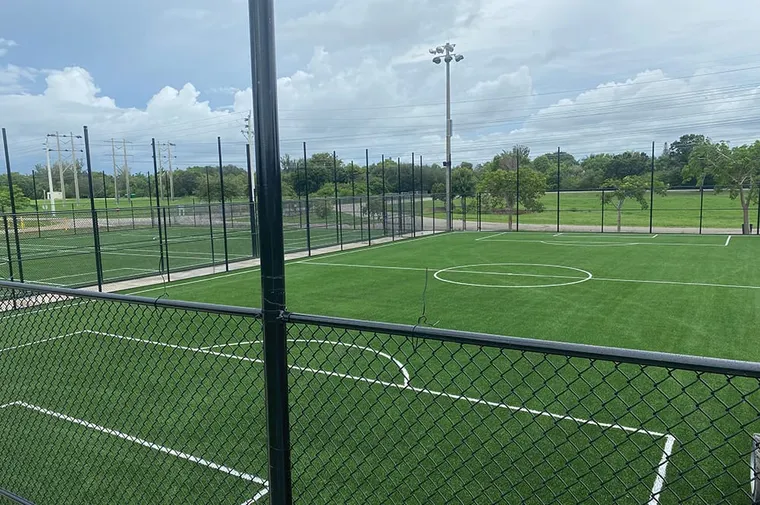
Consider small-sided fields
Wildly popular at the youth level, soccer and lacrosse are big tournament draws. One of the most successful formats—and one seeing tremendous growth—is small-sided play. By having fields lined to create multiple smaller fields, one large field can host multiple games at the same time.
In soccer, play formats can include 3v3, 4v4, 5v5, 7v7, 8v8 and 9v9 (as opposed to traditional 11v11). In lacrosse, the emerging small-sided format is 6v6. The format can be a valuable teaching tool for coaches.
The advantages of the format, say coaches and tournament organizers, are many. Developmentally, players get more touches on the ball, have less running to do, have a better sense of responsibility, and learn teamwork at a younger age. And with every player’s presence counting more, the game becomes more enjoyable for the children.
Other advantages from the operational side include increased access and optimization of field space. On the program manager’s side, an enormous plus is more affordable cost (one field may host multiple games in either recreational or competitive play, at one time) and happier parents (who get to see their children play more often).
And in case you think the trend has gone unnoticed beyond the youth-sports level, the health advantages of small-sided play were the subject of a research paper published by the National Institutes of Health (check out A Review on the Effects of Soccer Small-Sided Games, by Marco Aguiar, Goreti Botelho, Carlos Lago, Victor Maças, and Jaime Sampaio). That isn’t the only academic research being done; a number of studies have been published recently.