
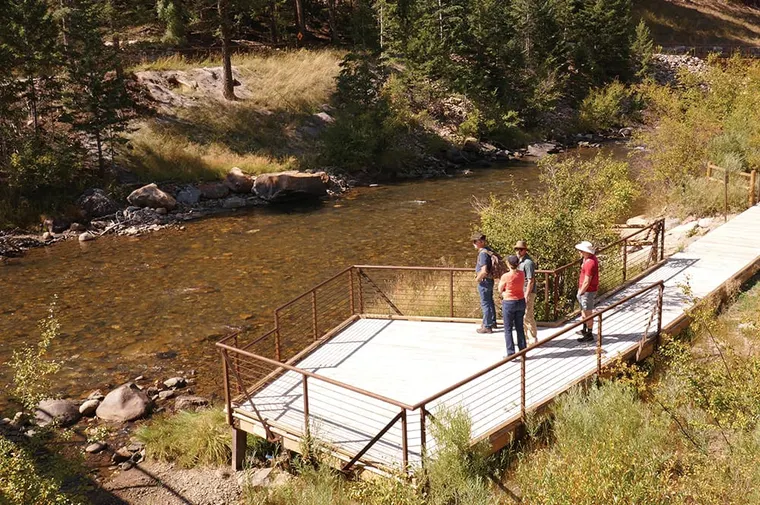
Provide access, and people will find a way to enjoy it
By Clarkson Wischmeier
Water-balloon wars were the outdoor equivalent of prime-time specials on the hottest days of my childhood. Armed with full balloons, my friends and I formed teams and wreaked havoc, resulting in unbridled joy and respite from the heat. Tromping through local creeks provided another strong connection to water throughout my youth; damming the small flows of water, wading, and hunting for crawdads were entertainments for hours on end. Those adults who grew up with similar experiences will likely agree that every child should get to experience the cold shock of water balloons, the splash of waves, or the delight of wading in a creek.
Humans are innately drawn to water. We seek the connection in simple ways—skipping stones, enjoying overlooks near streams, or strolling around a lake. But many people cannot enjoy these connections as they are simply inaccessible. Urban infrastructure, lack of legal access or transportation, safety or health-related issues, a history of inequitable land-use policies, and myriad other barriers prevent people from experiencing natural waterways. In some contexts, this lack of access is exacerbated by the effects of climate change and increasingly intense urban heat islands. Public parks and open spaces have the unique ability to provide much-needed opportunities to connect with water, both actively and passively, and in both natural and urban environments.