
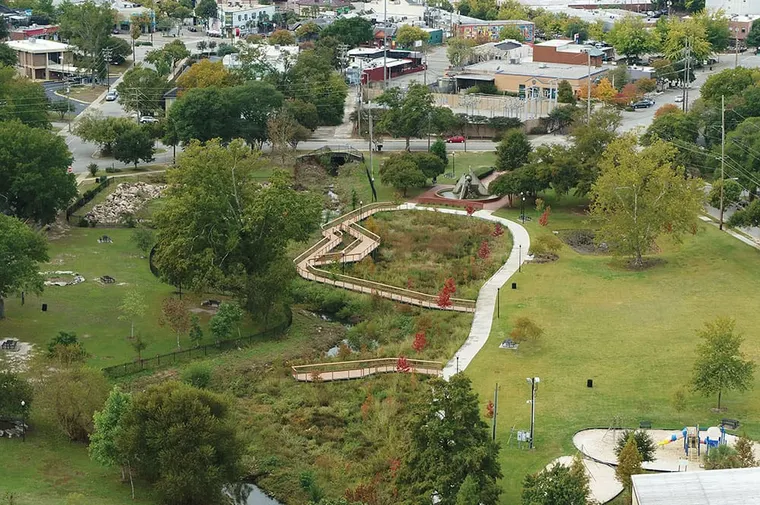
Transforming Columbia’s MLK Park from nuisance to attraction
By Trevor Gauron
Columbia, S.C., planners have been actively addressing water-related issues since the city’s inception in 1786. According to history, the first streets were designed to be between 100 and 150 feet wide to evade mosquitos, which were believed would die of starvation if they had to fly more than 60 feet. Another historic anecdote relates how one of the city’s main streets was initially paved with wooden blocks, which routinely (and humorously) floated away during heavy rains.
More than 230 years later, the city’s streets remain comfortably wide due to that pesky, water-borne insect and, thankfully, have been paved to no longer float away in the still stormy Southeast.
The renovation of Martin Luther King Jr. (MLK) Park has followed a similarly constructive path. The downtown park is located near Five Points, a thriving entertainment district in a highly urbanized area. Flooding in the Five Points area has been a highly visible issue, as overflow from the nearby Rocky Branch Creek routinely causes damage to local businesses and residences.
MLK Park serves its surrounding community in multiple capacities. It is predominantly a passive park, with a softball field, community center, playground, and an extensive open area to host softball tournaments, outdoor concerts, festivals, and social gatherings.
The park also has a large, open field that offers plenty of outdoor, aesthetic green space for the community to enjoy. However, over the years, the low-lying areas closest to Rocky Branch had become virtually unusable due to frequent flooding and extended periods of saturated soil.
In 2018, to address these flooding issues and enhance the appearance and purpose of the park, the city contracted with Woolpert to design and construct an “off-line,” dry detention area to assist with stormwater attenuation. The goal of the project was to increase the overall stormwater storage capacity within the park, slow the velocities within the stream during storm events, and provide for pollutant trapping within the new storage areas, while extending the park’s functionality and benefits to the region.