
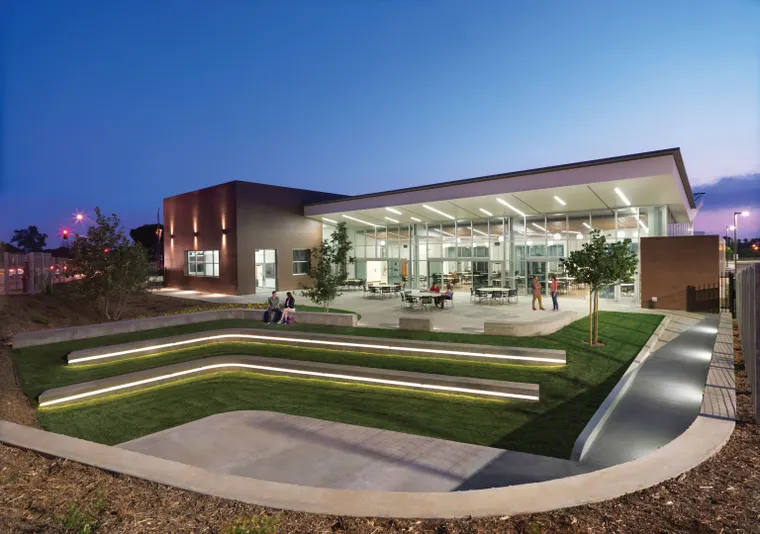
Photo Credit: Ryan Beck Photography | Courtesy of HMC Architects
Public agencies—cities, counties, and school districts—face a common challenge of limited funding for capital-improvement projects while working independently to meet various community needs. When agencies operate in silos, each pursues its own projects and is often unaware of overlapping needs. They often develop duplicate facilities, such as pools, libraries, and gyms, that sit underutilized and strain taxpayer resources. Land scarcity and rising construction costs only compound the problem. Without collaboration, communities pay more for less, and vital projects can remain unfunded for years, resulting in missed opportunities to deliver more impactful community amenities that can serve the entire community.
A Better Solution
Agencies that embrace joint-use models and pool capital and operational resources to create shared facilities can efficiently serve multiple functions and constituencies. Beyond facilities, this approach fosters cross-agency relationships, enabling broader collaboration on community initiatives. It also reduces the need for repeated tax measures, easing the financial burden on residents. In this collaborative model, a high school pool, for example, can host city-run swim programs during off-hours. Further collaboration, including shared staffing and programming, reduces downtime and maximizes public benefit.
We’ve seen this joint-use model work well in several recent projects. One city client in Southern California is creating an aquatic center in the High Desert. The project is a joint venture among the city, school district, and community college district to fund and operate a single aquatic facility. The city plans to use the center for community swim lessons and recreation while the school and community-college districts plan to host swim-team practice and competitions to further support student-athletes and reduce the pressure on local campuses. This collaborative approach is predicted to reduce costs and increase access.