
Transformation begins by listening
By Ryan Geismar
Just a few years ago, Ziegler Park in Cincinnati, Ohio, used to be a dangerous place. The pool was only open a few months a year. Adults hung out in the playground and drank alcohol. Drive-through drug dealing and violence were commonplace. Only a few days before a planned meeting to discuss the park’s future, a shooting occurred at the basketball court, and a site walk-through was held with police crime-scene yellow tape still wrapped around some of the fence. It was a place that desperately needed change, but the change needed to be grounded in the community.
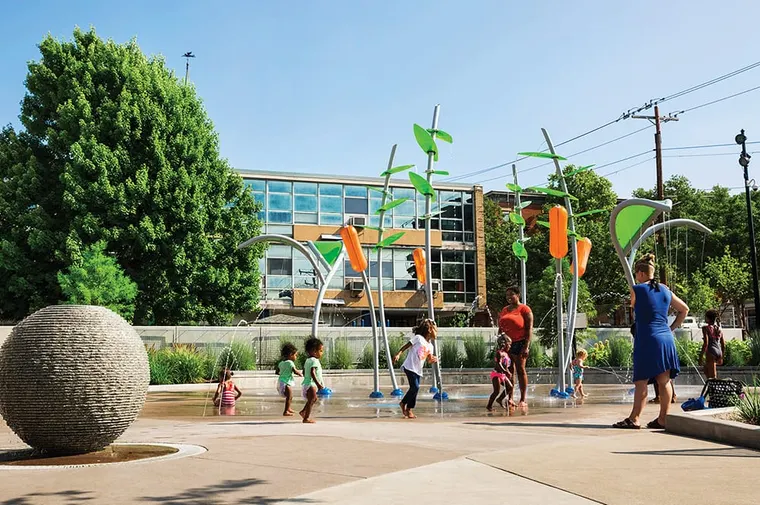
In 2016, this park, that bridges the urban-core neighborhoods of Pendleton and Over-the-Rhine (OTR), became the focus of a transformative process that would lead to a multi-million-dollar renovation and ripple effects of reinvestment in the blocks surrounding the park. It was a partnership project among 3CDC (the Cincinnati Center City Development Corporation), the Cincinnati Park Board, and the Cincinnati Recreation Commission. While the renovated park includes upgraded basketball courts, a children's playground, a game grove, and a great lawn with a parking garage underneath, the centerpiece is really the swimming pool, which is the only deep-water pool in the neighborhood.
A public swimming pool is vital to residents of dense urban neighborhoods like Pendleton and OTR. It serves as a healthy and safe place for social interaction, recreation, training, and cooling off in a hot summer. Although a pool existed at Ziegler Park prior to the renovation, it was small and underutilized—only 1,500 people visited the pool during 2015, the last year it was open before the renovation. In 2017, the first year of the renovated pool, there were 19,000 visitors, surpassing the 2015 attendance number in the first week of operations. And, in 2018, that number increased to 34,000 visitors.