
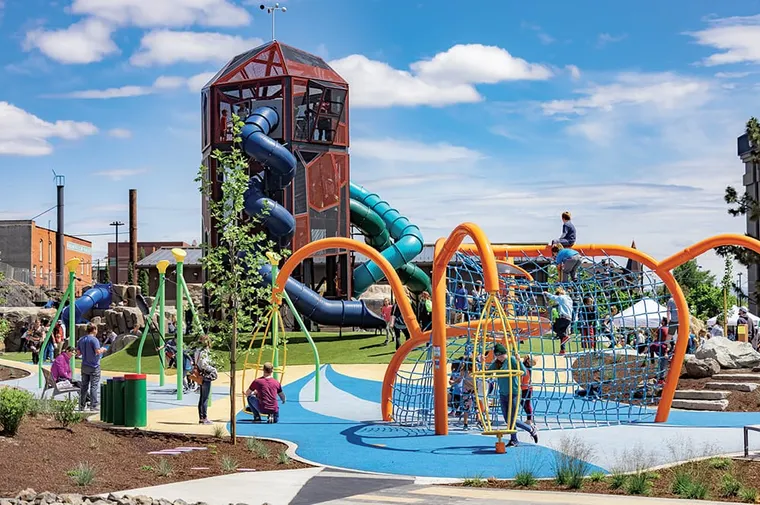
Ice Age Floods Playground offers a glimpse into the events that shaped the region’s geography
By Josh Morrisey
In 1974, the little big town of Spokane, Wash., changed forever when the city cleaned up a blighted 100-acre area of downtown and used it to host the Expo '74 World's Fair. Then, in 1978—four short years after President Richard Nixon declared Expo '74 “officially open to all the citizens of the world,”—President Jimmy Carter dedicated the former fairgrounds as Spokane's new Riverfront Park.
“You’ve transformed an area that was declining, that was far short of its great potential, into one of the nation's most innovative and refreshing urban settings,” Carter said in his speech.
In the years that followed, Riverfront Park became known as Spokane's crown jewel and the top attraction for tourists, hosting large community events, an IMAX theater, seasonal carnival rides, and an ice rink. But it lacked one thing that most people would find surprising for the premier park in any city—a playground. Aside from the remains of a small play area once used by an adjoining YMCA for daycare, there was no playground in the 100-acre park.
By the 2010s, Riverfront’s charm had visibly faded as facilities and infrastructure became outdated, and attractions that were once a big draw became less and less desirable for a changing demographic of citizens.
In 2014, citizens overwhelmingly approved a $64-million bond to improve and redevelop their prized downtown park. The public requested the bond fund three new attractions, one being a destination playground.