
The hidden power of social design in outdoor fitness
By Nic Breedlove
Adult fitness trails are growing in popularity. They turn parks into a low-cost way for community members to be outside and invest in their health. When well-made, trails provide a pleasant blend of strength and cardio stations that allow individuals to get a good workout. Trails also double as opportunities for quality social interaction when they’re designed the right way.
The problem is that, while there is a wealth of information available about the right machines and routines for fitness, social interactions are often overlooked. And yet, it is this element more than anything else that turns many adult fitness trails into neighborhood hot spots, while a lack of social opportunities leaves other trails empty and unused.
For parks and recreation leaders involved in or considering creating an adult fitness trail, there are some social cues and environmental factors to consider with every layout. The following are subtle design decisions that can turn a standard fitness trail into a social motivator and a true training hub.
1. Plan Sightlines
Isolated trails can end up feeling like a home gym. Sure, one is outside, but if he or she is surrounded by trees and alone while doing pull-ups or squats, the experience won’t provide the camaraderie that many seek in this type of environment.
This is where sightlines become important. Choose portions of a park or existing trails that have a clear line of sight between different areas. If a trail wraps around a pond or cuts across a field, this can be a good area to help users see one another as they work out.
This is important because seeing others while exercising encourages participation. It normalizes the activity. Good sightlines make a trail feel more welcoming, secure, and community-oriented. It overcomes any hesitations an individual might have at the thought of working out in a park or outdoor setting.
2. Place Benches In Strategic Spots
It’s easy to become so focused on the exercise part of an adult fitness trail that designers may miss the need to rest. And yet, rest and recuperation are a key part of any fitness routine.
They’re also a critical factor in encouraging socialization. Benches transform fitness trails into social spaces where individuals can rest and interact. Each bench becomes an organic gathering spot where people can engage in conversation. It also makes room for older adults who may need more opportunities to sit throughout a workout.
Additionally, benches help with sightlines. Use them to strategically turn points along the path into places where people can linger, observe, engage, and plan their next move. Be sure to place benches in the shade whenever possible so they’re attractive options for people looking for a break.
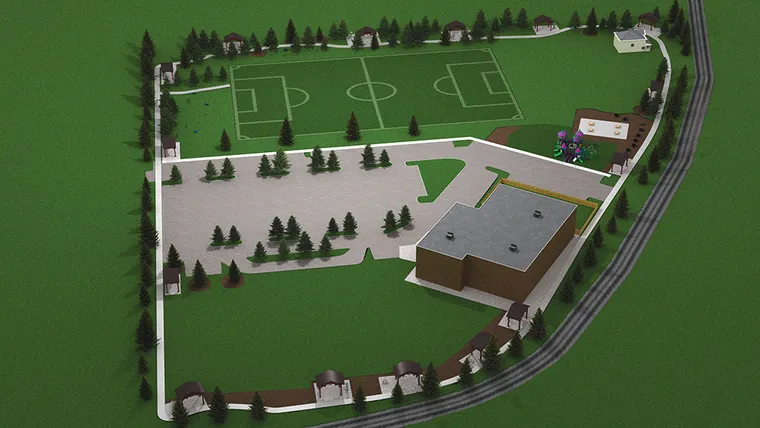
“As we were designing the Faithwalk Community Fitness Park, we wanted to create spaces that invited both movement and mindfulness,” says Liz Hughes of Noah’s Parks & Playgrounds. “Instead of just benches, we incorporated gazebos that housed each of the 15 fitness stations, each paired with a prayer verse. The stations circle the half-mile asphalt jogging and walking path along the park’s edge, offering visitors places to pause, reflect, and connect—physically, spiritually, and socially.”
3. Consider Group Circuit And Station Spacing
Whenever setting up a circuit station along a path, consider group versus individual spacing. Make sure each station has enough room for each person on the trail to exercise without being on top of each other.
This doesn’t only provide personal space. It is an important part of the social design of a trail. If leaders make a circuit too claustrophobic, once one person is on it, others will be more likely to pass it by. Making stations bigger encourages people to use them at the same time, setting the stage for interactions without overcrowding.
While spacing out a circuit, consider spacing, too. The amenity should accommodate larger groups. If people know a group of several people can use circuits simultaneously in flow, they’re more likely to select that trail for workouts with friends.

4. Create (And Maintain) Shared-Use Areas
The concepts for circuit spacing should be applied to general-area spacing as well. Be sure to create shared-use spaces where people can congregate and engage in freestyle activities at the same time.
Parks are great places for workouts like yoga and other group classes. Even having room to stretch is important. When an adult fitness trail has clean, clear places for these activities, it encourages more use with groups looking for a more social workout experience.
Keep landscaping in mind here, too. Open spaces can easily feel out of control. Even minimally uncut grass can start to feel unwelcoming. Dirty, rubber safety-surfacing, a littered space, and even factors like too many fallen leaves or excessive bird droppings will give a trail a bad reputation.
5. Use Lighting To Extend Trail Time
If there’s a budget for lighting, this can be a game-changer. Lighting extends trail use into the early mornings and evenings. This is primetime for many fitness enthusiasts, who are the most active and available before and after work hours.
Lighting also provides safety along routes. It signals that a trail is well-kept and communicates it is designed for exercise and fitness use during peak fitness hours.
Budget is the biggest factor, however. If there’s an area of a park that is already well-illuminated, consider it as an option for tapping into the benefits of lighting without overextending departmental finances.
6. Don’t Forget Ambience
Finally, step back and consider the park aspect of an adult fitness trail. Yes, it’s a space for people to exercise and engage in the common pursuit of health and fitness. But it is still part of a larger outdoor environment. Are department leaders keeping its design elements in line with those larger expectations?
There are many ways to invest in ambience without interrupting the flow of a trail. Water fountains are a good option. Locating them near a natural body of water or a visually stunning piece of nature is also great. “As we designed the Faithwalk Community Fitness Park, we focused on creating an environment that feels uplifting and engaging,” says Hughes.
Basically, any time one can incorporate both manmade and natural soundscapes and visuals into a fitness trail, do so. This will soften the “workout” feel, reduce the intimidation of the experience, and transform the space into an area of which leaders and residents can be proud. “From the waterfall prayer garden and American Ninja–style obstacle course to traditional park features like Kingdom Playground swings and a horizontal climbing wall, we combined these with the fitness stations and walking/jogging trail to ensure the park is more than just exercise—it’s an immersive outdoor experience that encourages movement, reflection, and play for visitors of all ages,” Hughes adds.
By thoughtfully blending these features, the trail becomes a place where visitors can enjoy both fitness and the calming, inspiring elements of a park environment.
An Adult Fitness Trail Checklist
If leaders already manage a trail or are looking to set one up, the aforementioned tips can help turn a trail into an amenity that promotes itself. When showing care and investment in a setup, people will notice, and the fitness community will show up as the word spreads.
For now, the following series of questions can gauge how well a department is addressing design concerns, either in an existing or upcoming trail design:
- Are sightlines being used to improve the user experience?
- Are users offered options for rest, such as benches at strategic spots between stations?
- Is there enough space on circuits for groups as well as individuals to work out simultaneously without getting in each other’s way?
- Are the same space considerations being applied to shared, open spaces—including ongoing maintenance?
- Is lighting being utilized on trails as much as possible to encourage longer hours of operation that accommodate exercise schedules?
- Is there investment in a park-like ambience that capitalizes on the relaxing and inviting elements of natural, outdoor spaces?
Nicolas Breedlove is the founder and CEO of NVB Playgrounds, which manufactures and distributes playground equipment to roughly 350 distributors across the U.S., serving government and businesses in Indianapolis, Savannah, and Houston. He leads design and product development, quick-ship solutions, and inspection software, and instills core values that drive performance and growth.