
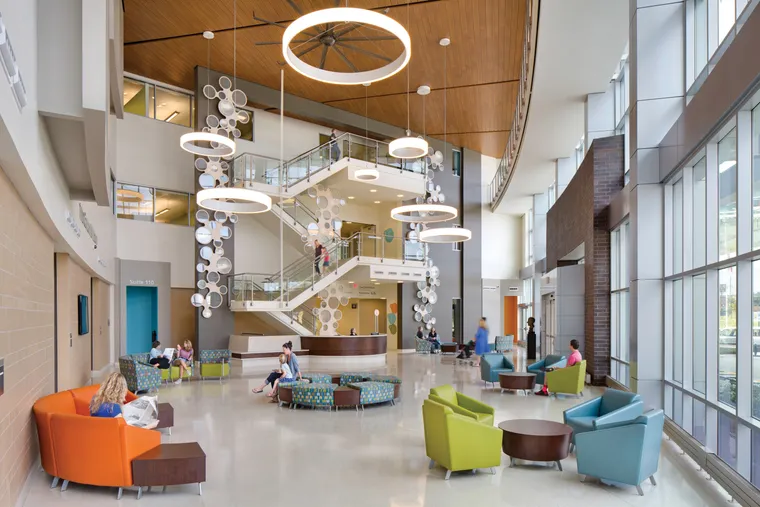
How civic architecture can redefine resilience
As communities face frequent climate events, social disruptions, and infrastructure challenges, civic architecture is being reimagined as a front line of resilience. Libraries, recreation centers, and municipal buildings—once regarded as the background fabric of civic life—are increasingly recognized as essential public assets that can sustain communities during crises.
From heat waves and rolling blackouts to wildfires and floods, these everyday facilities can do more than host after-school programs or council meetings—they can serve as shelters, distribution hubs, and command centers when emergencies strike. Yet, realizing this potential requires a mindset shift: civic leaders must see these buildings not only as amenities but as lifelines. To understand how civic buildings can become lifelines rather than liabilities, it helps to examine how their everyday strengths can be leveraged in extraordinary moments.

Expanding The Role Of Public Facilities
During the pandemic, libraries across the country became vaccination sites, food distribution hubs, and digital access points. Their design—spacious, connected, and embedded in neighborhoods—made them natural centers of support. This experience underscored a larger truth: civic buildings can be designed for dual purposes, supporting both routine activity and emergency response.
A recreation center built for fitness programs could easily transform into a refuge during a heatwave. A city hall designed for administrative efficiency could double as a coordination hub during power outages. Such transformations don’t demand radical reinvention—just foresight during design and planning.
The first step is institutionalizing resilience assessments for all civic projects. While law enforcement and emergency operation centers typically include such evaluations, other facilities rarely do. Applying the same level of preparation across libraries, community centers, and public health clinics ensures that these buildings can adapt quickly when needed most. But vision alone isn’t enough—lasting resilience depends on how these facilities are designed, built, and maintained to perform under pressure.
From Code Compliance To Future Readiness
Many public facilities are designed to meet minimum code requirements—sufficient for normal operation but inadequate when conditions change. Building codes, after all, are historical documents; they respond to past climate data rather than anticipate future extremes.
A building that meets today’s standards for temperature, power, and water demand may find itself underperforming within a decade as environmental stresses intensify. Forward-thinking design anticipates that change. Civic facilities with generator hookups, adaptable restrooms, and reinforced HVAC systems can maintain operations even when utilities fail or air quality deteriorates.
These improvements don’t require major investments. A transfer switch for a portable generator can turn a powerless building into a refuge. Designing flexible furniture layouts or converting restrooms into showers costs little but dramatically expands usability during emergencies. In this sense, “good enough” is no longer enough—the public depends on civic infrastructure that can endure and respond. Beyond emergency planning, the most enduring form of resilience comes from sustainability itself—the systems that keep buildings operational when the unexpected happens.

Sustainability As A Catalyst For Resilience
The line between sustainability and resilience is rapidly disappearing. Energy efficiency, renewable power generation, and water reuse systems are not merely environmental add-ons—they are operational safeguards.
Daylighting reduces reliance on artificial lighting and helps maintain function during outages. Biophilic design, often valued for improving mood and productivity, can also enhance staff endurance during crisis operations. Water-reuse systems, once seen as sustainable luxuries, become mission-critical when local water supplies are disrupted.
Clients sometimes view these features as “nice to have,” but they’re gaining urgency and moving to the “need to have” column. Yet, when framed in terms of continuity, reliability, and long-term value, sustainability becomes a compelling argument. At first, costs may seem high, but the return on investment becomes clear when a facility remains operational during a blackout or heat event.
Sustainability, in short, is not a separate agenda—it is the foundation of resilience. Still, even the strongest sustainability strategies only reach their full potential when paired with thoughtful, practical planning for real-world use.
A Planning Mindset For Emergency Utility
Resilient civic design is not about complexity; it’s about planning and organization. Portable generators, for instance, can provide critical backup power, but only if buildings are designed to accommodate them safely and efficiently. Properly ventilated connection points and preinstalled switches ensure that these devices can be deployed quickly and effectively when the grid goes down.
Equally important is spatial adaptability. Flexible furniture, wide circulation routes, and multi-use rooms make it easier to manage large groups of people or distribute supplies. Even restrooms can be planned for dual use, converting into shower facilities during extended emergencies. These simple provisions allow public buildings to shift seamlessly between everyday modes and emergency modes.
Ultimately, this is less about cost and more about coordination—creating civic environments that stay operational when residents need these facilities most. For these ideas to take root, civic leaders and design teams must reframe how they talk about resilience—not as an added cost, but as a long-term investment in community continuity.

Reframing The Conversation With Civic Leaders
Convincing public clients to prioritize resilience begins with reframing the conversation. Rather than positioning sustainability or resilience as regulatory burdens or cost centers, architects can highlight their connection to community well-being, operational continuity, and long-term fiscal responsibility.
Civic leaders should be encouraged to ask:
- How will this facility perform during a power outage or flood?
- Could it operate as a temporary shelter?
- Are its systems adaptable for emergencies?
By embedding these concerns early in design discussions, municipalities can extend the value of every taxpayer dollar—creating buildings that serve both today’s needs and tomorrow’s emergencies. By adopting this perspective, cities and counties can move from reactive planning to proactive preparedness—setting the stage for a new era of civic resilience.
The Future Of Civic Resilience
Hospitals, data centers, and industrial facilities are already designed for uninterrupted operations. Civic buildings deserve the same foresight. They are among the most accessible, visible, and distributed assets in any community—and therefore the most critical.
As climate and social pressures escalate, the civic realm holds untapped potential to shape a more resilient society. By embracing dual-purpose design, cities and counties can ensure their public spaces remain not only places of gathering, but places of safety and strength. In the end, the path forward is clear: resilience is not an upgrade—it’s a responsibility. Every civic building designed today carries within it the power to safeguard tomorrow.