
Adapting youth-sports operations and programs during a population boom
By Shea Sengelmann
In a recent meeting with a city whose personnel were only in the beginning stages of developing a recreation program, I was asked what I thought the biggest challenge would be for new staff members. As I’m sure is the case with most professionals post-conversation, I realized on the drive home that I had a better response to that question than the one I gave. The simple response I wish I had given—growing pains.
That small city was assembling its recreation department to keep up with its rapid population growth, thanks to its sprawling metro neighbor. Additionally, the city of Celina (Texas) is in the heart of one of the fastest-growing regions in the U.S., bordered by booming cities like Plano, Frisco, and McKinney. When I began as an intern for Celina in 2016, the service population was 7,000 residents. Fast forward to 2022, and city officials estimate the service population at around 30,000. The total build-out population for Celina is just over 350,000.
When I was hired full-time in 2017, Celina had two recreation staff members, including me. We managed the entire youth-sports operation, including flag football, baseball, and softball. Since then, we have added soccer and basketball. To give an example of how league growth has matched the growing population, let’s examine flag football and soccer. In 2017, flag football had 50 teams in the league. In 2022, there were 113. When the soccer league was added in 2019, it began with 12 teams. In 2022, the league had 60 teams.
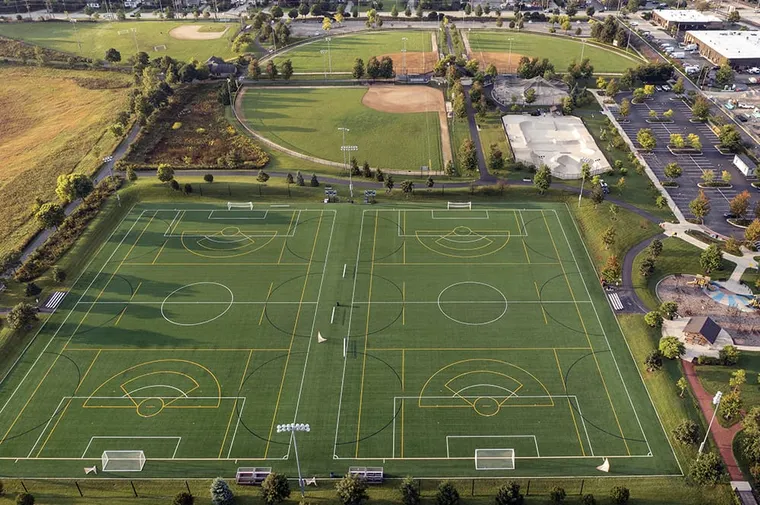
The rapidly growing youth-sports programs have presented a host of obstacles to navigate in providing high-quality recreation experiences for participants. How do we operate our one and only sports complex to efficiently host these massive events? How do we staff these programs? How do we become more efficient? Here are a few of the major issues in regard to operations and how we have managed to keep up with the unprecedented growth: