
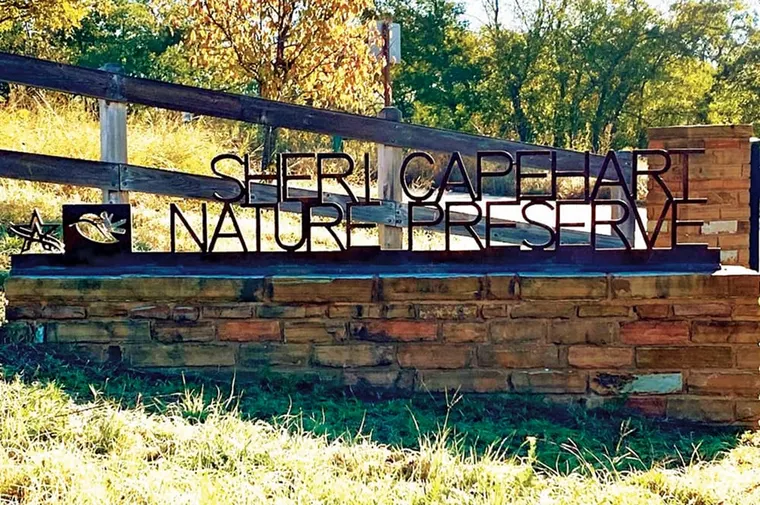
It would share its history and hope for the future
By Laura Capik
“You wouldn’t believe the things I have seen during the more than 200 years since I put down roots here on the north side of the rugged ridge that overlooks more than 58 acres of a beautiful remnant of the Eastern Cross Timbers.”
That’s how a 45-foot-high Post Oak tree in the Sheri Capehart Nature Preserve in Arlington, Texas, would probably reminisce if it could speak.
It might also boast of its 2019 designation as a Historical Tree by the Texas Historic Tree Coalition and its new name, The Caddo Oak, in honor of one of the Native American tribes that lived under its canopy.
The Early Years
“Yes, I was home to the indigenous population,” the tree might note. “From the Clovis Indians who roamed this area 37,000 years ago to the Caddo Indians who were here for 1,200 years, as well as the Cherokee and Tonkawa tribes that lived in and around me. Under my branches they drew water from Village Creek and hunted buffalo roaming the prairie that became Fort Worth, Texas.”
It might also brag that it is the largest Post Oak in Arlington.
“My circumference is 55 inches, and my branches form a 65-foot canopy.”