
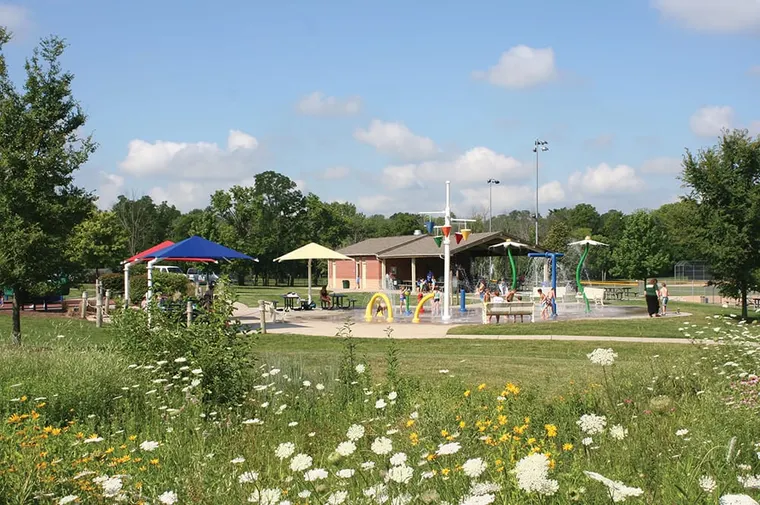
Bringing natural areas to suburban and urban parks
By Arnie Biondo
“Hey, mow down those blankety-blank weeds!”
Any park agency that adds native prairies, pollinator gardens, wildflower areas, or monarch waystations has heard a version of this. Why is that? There are many reasons why such areas bring heated words from some neighbors. They are breeding areas for rats and vermin, and, yes, for mosquitos. It’s not what a park is supposed to look like. Parks should be mowed. If you are not mowing, then you are lazy or—worse—wasting taxpayers’ money.
A Few Good Reasons
The real source of complaint comes from perception. In the USA for decades, parks have been places of wall-to-wall mowed turf. It’s simply what most people are used to. Mowed lawns are the paradigm for park appearance. While there is nothing wrong with mowed turf, there are good reasons for park departments to bring natural areas into neighborhood parks:
- Introduce new colors and textures
- Provide cleaner air with less mowing
- Provide cleaner water
- Use fewer herbicides and pesticides
- Offer a nature-study opportunity
- Attract birds and butterflies
- Provide children a place to play and use their imagination.
From the park and recreation management perspective, there are more benefits:
- Less time mowing means more time for other duties.
- Less money is spent on fuel.
- Hazardous mowing duty is reduced on hard-to-mow slopes.
- Programmers are provided a ready outdoor classroom.