
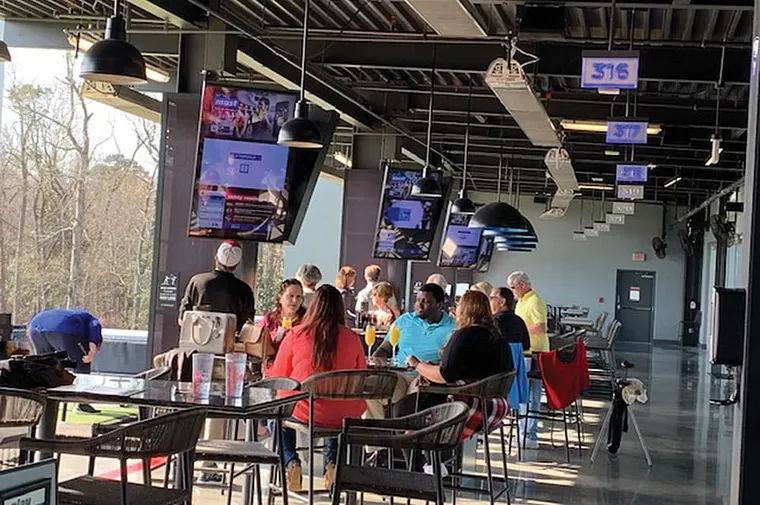
Can golf-entertainment venues give the sport a shot of adrenaline?
By Kimberly A. Batty
Historically, the sport of golf has been reserved for a very narrow demographic. According to the National Golf Association, the average golfer is a 43-year-old male with an annual household income of $125,000—more than twice the national average (U.S. Census Bureau, 2016). In terms of participation rates, the growth of the game peaked in the 1990s during the Tiger Woods era. Over the past two decades, the industry has experienced declining numbers despite the efforts of the United States Golf Association, PGA Tour, and The PGA of America’s initiatives to introduce youth to the sport. From 2015 to 2016, the number of golfers decreased by 1.2 percent (Stachura, 2017). Additionally, for many years golf course closures have exceeded new course openings several-fold. Closures have occurred in equity and non-equity courses, resort courses, and municipal/county courses.
How To Increase Participation
The overriding question is how to bring a more diverse population to the sport and, in turn, increase participation. It’s clear that today’s Millennials are seeking more experienced-based activities in their lives. Furthermore, the hectic lifestyle of many doesn’t fit with the 4- to 5-hour round of golf, coupled with the drive time to and from the course. This raises the question, “Does someone need to play a round of golf as a way of measuring the success of golf participation?”
In an attempt to increase participation rates and appeal to a more mainstream and younger audience, data are now being collected in alternative and novel ways. This seems to be a strategy worth pursuing. In fact, approximately 8.2-million people have never played a round of golf, but have participated in some form of the sport, including visiting a driving range, using a golf simulator, or visiting a golf-entertainment facility (Stachura, 2017).