
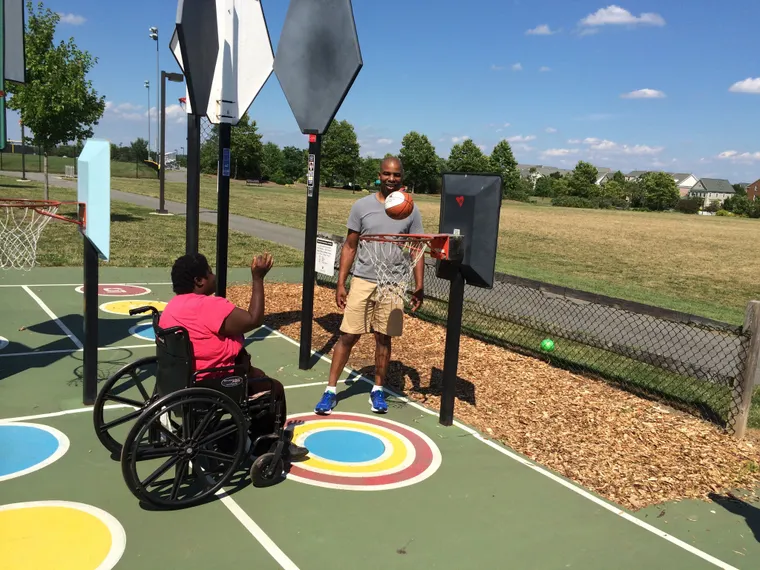
When children have outgrown preschool playgrounds, then what? We have games, sports, and playfields. These are words used and often interchanged within the vocabulary of the recreational and playground specialist. There appears to be many ways to establish a distinction among these terms. But one overlooked distinction concerns the reality that the overwhelming number of sports played in society are sports designed to defeat others.
There is no “game” in these sports without an opponent. These combat-like sports cannot be played without winners and losers. Coaches and instructors teach how best to best others. That's one of several criteria in the use of the language we employ concerning recreation. An important distinction that should not be overlooked is the one in which play is alongside rather than against others, and there is no one to defeat. These are sports without opponents. These are sports that are self-competitive.
Concerning ball-playing sports, for which facilities receive the greatest attention, funding, and space, we can readily determine which sports are in which category. Baseball, football, soccer, rugby, tennis, and lacrosse are categorized as requiring an opponent. Golf, bowling, and Bankshot, on the other hand, must be placed in another category altogether: Self-competitive, alongside play, no opponent necessary. Why so few of these and so many of the former? Some say Sparta, the city in Greece from which sport was derived, plays a role in this mentality, with a heavy focus on vanquishing foes. Fast-moving sports with body contact exclude. Sports played alongside one another include. There are many of the one. Too few of the other.