
Even good projects need adjustments along the way
By Brenda Iraola
Park designs should be unique, and should also provide amazing experiences for people to enjoy. This is what designers want to achieve when they begin a project. The park-design process can include obtaining funding, gathering ideas, connecting with the community, and understanding site solutions. As a licensed landscape architect and a professional for almost 30 years, I would like to share some insight about designing public park spaces and lessons learned.
As a design and construction manager for the Landscape Architecture Section of the Park Development Division for the Maryland-National Capital Park and Planning Commission, I am responsible for millions of dollars of capital-improvement funds for park projects. My five staff members are all licensed landscape architects, are very talented, and have many years of experience with park design. The following is a look at a project, that despite its success, required adjustments along the way.
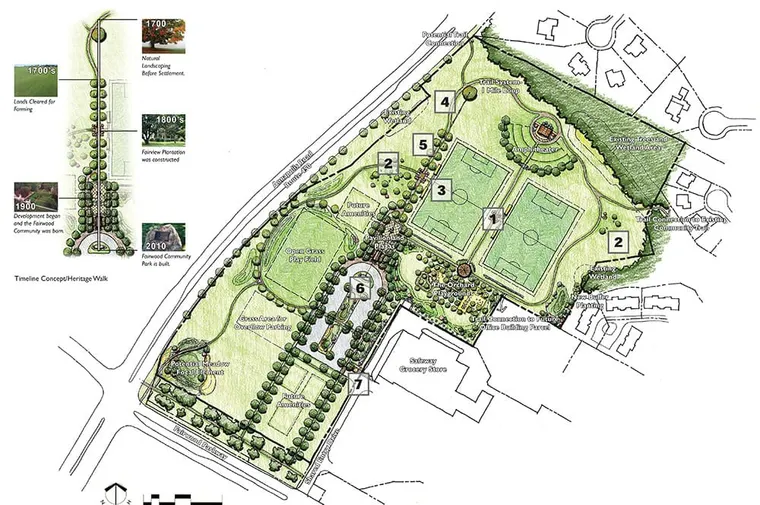
Fairwood Park Design Concept (Site History)
In the late 1700s, the land proposed for the Fairwood Community Park comprised several farms and three main estate homes—Fairwood, Fairview, and the deClairmont. The design of the park is a modern twist on the architecture of the colonial era and mimics the formal fashion and estate-like appearance of the homes that once graced the property. The park’s layout incorporated design cues from great American estate manors: Monticello, Mount Vernon, and the Paca House. One organizational element of the design is the central axis that runs north and south on the site, which connects the park elements. The main access to the park serves as a “history walk,” which provides interpretive, educational signage to explain the site’s history.