
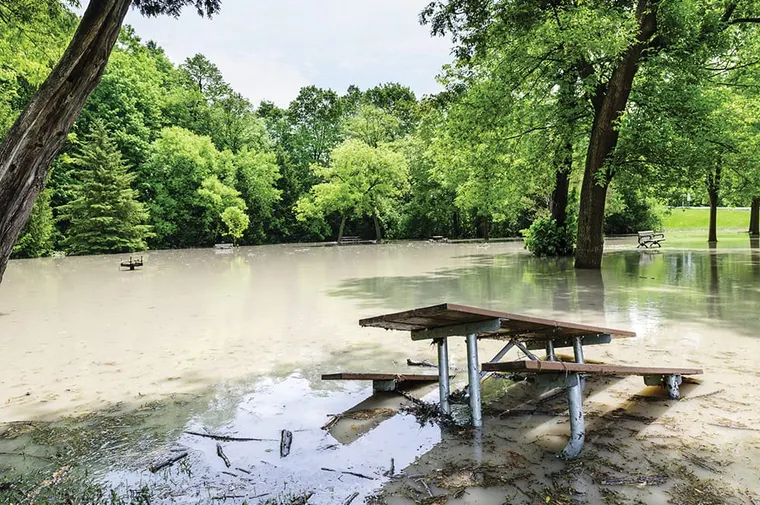
Smart designs and proactive planning can help mitigate the impact on the landscape
By Nikki Schlepp, Stacee Demmer, and Lydia Major
Climate change is transforming America’s parks. Warming temperatures increasingly affect plantings, wildlife, and even pest populations, requiring new maintenance regimes and management techniques. Severe weather dominates the news, resulting in flooding, erosion, and facility damage. Drought is widespread. Watering restrictions and fire bans are commonplace in many regions.
What’s more, as temperatures rise, communities are increasingly dependent on their parks—stressing resources further: We crave the shade and recreational opportunities that parks offer. Human impacts are compounding the effects of climate change.
There are problems aplenty, to be sure. But there’s also a bright side: Thoughtful design—coupled with smart management and savvy investment—can protect park resources, and build the case for resiliency. Parks can serve as a showcase for sustainable practices, resource management, and community education related to climate change. Well-designed parks can play a vital and significant role in the world’s response to climate challenges.
How do you design a park that’s prepared to adapt? Consider these seven principles: