
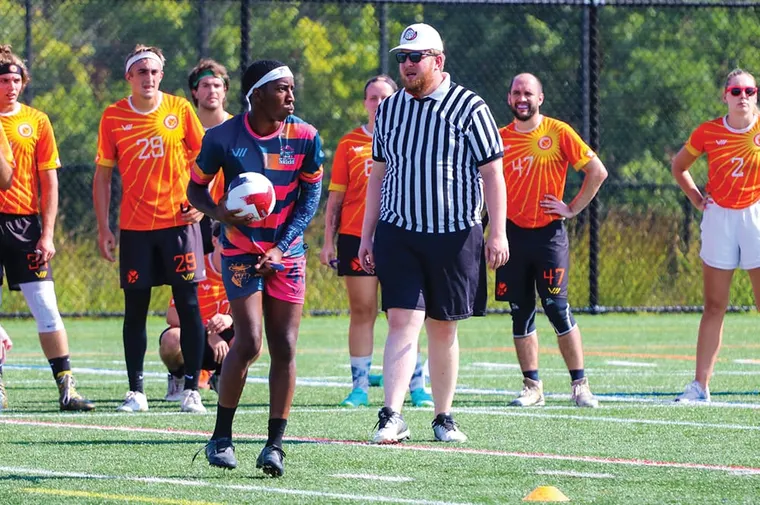
Creating fields of the future for up-and-coming sports
These are not your father’s sports. Or your mom’s, come to think of it, and they’d probably cause extreme confusion for plenty of other generations. For those who haven’t seen Quidditch and Ultimate yet, it’s only a matter of time before local clubs are asking to use your fields. Both sports are making tremendous gains in player populations at the college and club level, and parks and rec managers need to be ready.
In addition to the obvious advantages (increased field use and increased community involvement with the park), both sports can be leveraged on social media—and might result in some extra publicity for the park. In fact, outreach to local colleges and clubs to provide local play days or “open house” playing clinics might be an excellent avenue to involvement.
But no sport can be hosted without understanding the rules, so here are the basics:
Quidditch
Quidditch, the game that originated in the Harry Potter books by J.K. Rowling, has been adapted as a mixed-gender, contact field sport. Its highest-governing body is the International Quidditch Association (IQA), and in the U.S., the sport is governed by the U.S. Quidditch Association. Major League Quidditch is a competitive league and hosts play in the U.S. and Canada.
The game includes a dynamic and varied group of players. Each of the two teams has seven players who must always play with brooms held between their legs. Players, and their role in the game, are as follows:
- The Keeper is responsible for guarding the goal.
- Three Chasers are responsible for trying to put the Quaffle (a volleyball) through the goal to score a point.
- The two Beaters, meanwhile, use dodge balls called Bludgers to disrupt the flow of the game by “knocking out” other players.
- The Seeker is solely responsible for catching the Snitch (a neutral player whose uniform includes a long tail attached to the back of the shorts with Velcro).
- The Snitch must evade the Seeker. When the Snitch is caught (the Seeker pulls the tail off the Snitch’s shorts—similar to flag football—to prove capture), the team with the highest score wins. Obviously, the duration of a match varies, but it is generally between 30 and 40 minutes.