
The Beauty Of Handwritten Letters

The Beauty Of Handwritten Letters

In this post-truth era of AI-generated text and images, it seems quaint to consider the beauty of handwritten letters. But just as film photography is experiencing a renaissance, so are handwritten letters, especially among young people.

6 min read

Campers can use letter-writing to strengthen their connection to home

In this post-truth era of AI-generated text and images, it seems quaint to consider the beauty of handwritten letters. But just as film photography is experiencing a renaissance, so are handwritten letters, especially among young people.

Just recently, a student at the secondary school where I work told me she had given her new boyfriend a second chance “because he took the time to write me a handwritten letter.” When I asked what was special about “the time,” she identified the crux of what is missing from hasty texts and synthetic messages: “When you handwrite something, there’s no delete key, no auto-filled words, so I knew he had thought about what he wanted to say. I knew he cared about me … about our relationship.” Indeed, handwritten letters of any length require a human investment in relationships that electronic communication cannot authentically replicate.

Practice Makes Perfect

When Christopher Columbus returned to Spain from his first voyage, he wrote a 3,050-word, handwritten letter to his friend and sponsor, Luis de Santángel. The colorful letter described his journey, including landfall at what we now know as the Bahaman Islands, his impression of the native peoples, and an exaggerated account of the gold and spices he could secure for King Ferdinand and Queen Isabella.

Columbus’s monumental trip—however politically and culturally controversial today—may make a young person’s brief time at summer camp seem trivial. But truth be told, a young person’s time away from home and familiar environments is also monumental. It includes risks and unknowns; it demands trust in others and confidence in oneself; and its emotional intensity has the potential for enormous developmental growth. For those reasons, most parents and other primary caregivers agree that at least one letter home is in order. Unfortunately, most young people are adept at electronic messaging but somewhere between clumsy and lost when it comes to handwriting a letter.

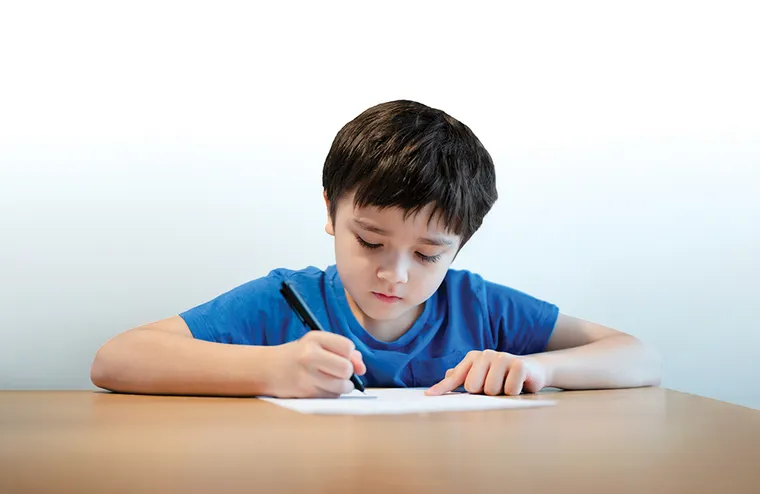
Like any other skill, letter-writing takes practice. Therefore, my suggestion is to begin at home, before camp starts. Writing a few practice letters is more about making the psychological adjustment to asynchronous, infrequent communication than it is about putting pen to paper, but kids need practice with both. Handwriting letters requires a radical shift from rapid-fire messaging. Fortunately, handwritten letters are perfectly aligned with the pace of other communication at camp. Like the heartfelt, face-to-face conversations that blossom every day at a high-quality program, handwritten letters are personal, deliberate, reflective, and expressive.

If you agree, don’t leave letter-writing to chance because its renaissance is just beginning. If your youth-serving organization is designed for kids to spend multiple days and nights away from home, you’ll need to coach families on the details. In The Summer Camp Handbook, Dr. Jon Malinowski and I suggest families begin by assembling the necessary ingredients: a dozen or more full sheets of wide-ruled white paper, #10 envelopes or similar, and a sturdy ballpoint pen. When it’s time to pack for camp, kids should seal these basic supplies in a zipped plastic freezer bag. That’s an inexpensive way to keep everything together and protect the paper from humidity. (Even a tried-and-true ballpoint pen will skip on humid paper, and pencils are hopeless.)


As an upgrade from loose sheets of paper, you can suggest the pads with thick cardboard backing. Campers typically compose letters in their laps or on sleeping bags. Stiff cardboard provides a rigid writing surface, almost like a mobile desktop. As for envelopes, the peel-and-stick variety is superior to anything that needs to be licked. Too often, humid camp weather seals all lickable envelopes on the first day, rendering them unusable. And stick to ballpoint pens. Roller balls, gel pens, felt pens, and fountain pens (popular with international campers) all use ink that runs when it gets wet. Ballpoint-pen ink tends not to streak when soaked. (Yes, a cabinmate will unwittingly sprinkle that half-written letter with water while toweling off in the cabin after a swim.)

Photo: © Christopher Nuzzaco | Dreamstime.com

Next, give families instructions on letter content, but don’t go overboard. Practice letters from home can be to friends or extended family members that kids haven’t seen in a while. Maybe they want to write to the astronauts in the International Space Station or to servicemen and women working abroad. The possibilities for recipients are vast, but the basic instructions for composition are finite: A decent handwritten letter needs a date, a salutation, body text, a closing, and a signature. Parents can explain that postscripts are optional, but at least they will have taught their child what P.S. stands for.

That covers the mechanics. As for themes, kids themselves can choose their letters’ particulars. It’s helpful to remind both caregivers and children that supportive letters are newsy, upbeat, descriptive, and inquisitive. Good body text will give the recipient a rich narrative of an experience, and good questions will give the recipient even more reason to write back. Suggest that kids close their eyes for a few minutes before writing and imagine what they want the reader to know. Describe what the sunset looked like; what it’s like to be in fifth grade; which aspects of the hike were most interesting; what activities they are most looking forward to; what about their friendships makes them happy; or (for teens) how a recent experience changed their thinking.


Parents can glance at these pre-camp practice letters before they are stamped and mailed, but they must resist the temptation to make corrections. A caring adult can simply point out the letter’s strengths and suggest one way it could be even stronger. But that’s for the next time. No rewriting. Letter-writing should be a pleasant, intrinsically rewarding experience for the writer. This isn’t a college essay; it’s a way for two people to connect. Once young people are at camp, parents, friends, and relatives can make letter-writing extrinsically rewarding by writing back.

Long-Term Benefits

With a bit of practice, any writer—no matter how young—will realize that handwritten letters have many advantages over phone calls, emails, texts, posts, and emojis. Handwritten letters entail the slow creation of detailed narratives. They may never reach 3,050 words in length, but that’s not the goal. Even brief handwritten letters deepen young people’s understanding of their experience. Simply put, when we create narratives, we prompt ourselves to reflect. And reflections beget insights, meaning both the writer and the receiver learn something new.


Handwritten letters also have another benefit: The process of handwriting a letter promotes adjustment and appreciation of our experiences, even if no one writes back. And as we all know, being away from home can be challenging, often sparking homesickness. Yet for people of all ages, maintaining a connection with home is one of the best ways to diminish the intensity of missing home. Better still, if caregivers do handwrite a reply, that comforting connection becomes even more powerful. (Personally, I eschew email replies to handwritten letters because they cheapen the exchange by sidestepping the time and effort invested by the original sender.)

I sometimes wonder how Columbus felt writing that first letter, what insights he gained, and how meaningful it must have been that he understood his sponsors wouldn’t receive his letter instantly. Truly, there is power in a handwritten letter that can’t be duplicated by electronic communication.  Imagine how thin a text to the king and queen might have sounded: F&I—land! Omg, right? BTW flat earth? lol. home soon! Clearly, it would not have felt the same as a handwritten letter, neither for the writer nor for the recipients.

Handwritten letters are a reviving art, not a dying one. They are a time-honored technique for self-expression and connection. Best of all, they are uniquely personal testimonials of a child’s development. They can be held, touched, reread, and cherished. They can even be bundled and treasured for decades. One final tip for families: Campers should pre-stamp and pre-address the envelopes they pack in their zipped freezer bag. If caregivers want letters from camp, the process needs to be frictionless. Yet even with practice and preparation, there are no guarantees. Remind adults that if their own handwritten letters go unanswered, they can rest assured that no news is good news.