
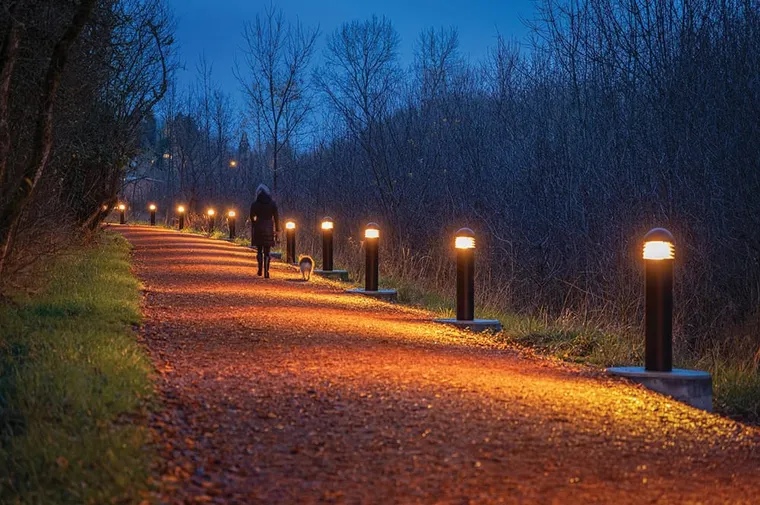
Pathway Lighting Reinvigorates Popular Running Trail
Community feedback spurred the renovations of the Amazon Park Running Trail in Eugene, Ore. The popular 5.5-mile bark and mulch pathway was re-built with a thicker rock base, new surfacing, and drainage. In addition, lighting was introduced or upgraded along sections of the trail.
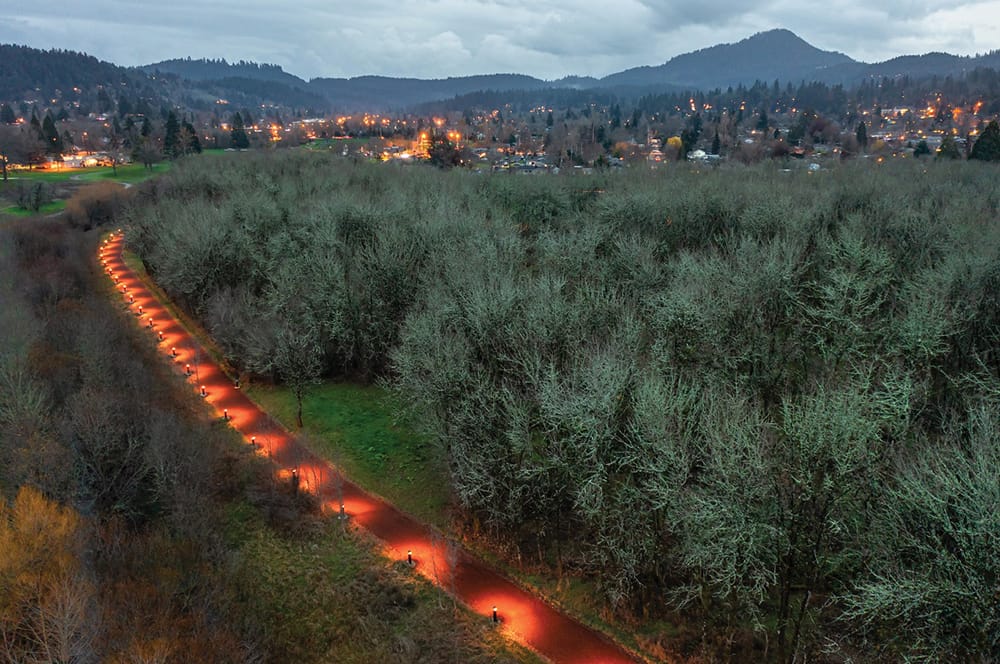
A particular quarter-mile stretch of the trail runs between the woods and Amazon Creek, and walkers and joggers had expressed concern about the lack of lighting on the narrow path. So, the city of Eugene approached HL Stearns Lighting & Controls to propose a solution.
Hydrel’s 3100C was selected. The impact-resistant bollard was chosen because it was able to address the project’s multiple lighting considerations, including safety, ambiance surrounding habitat, light pollution, energy efficiency, and durability. A total of 47 round bollards were installed along one side of the path.
Study Shows Parks Make People Happy
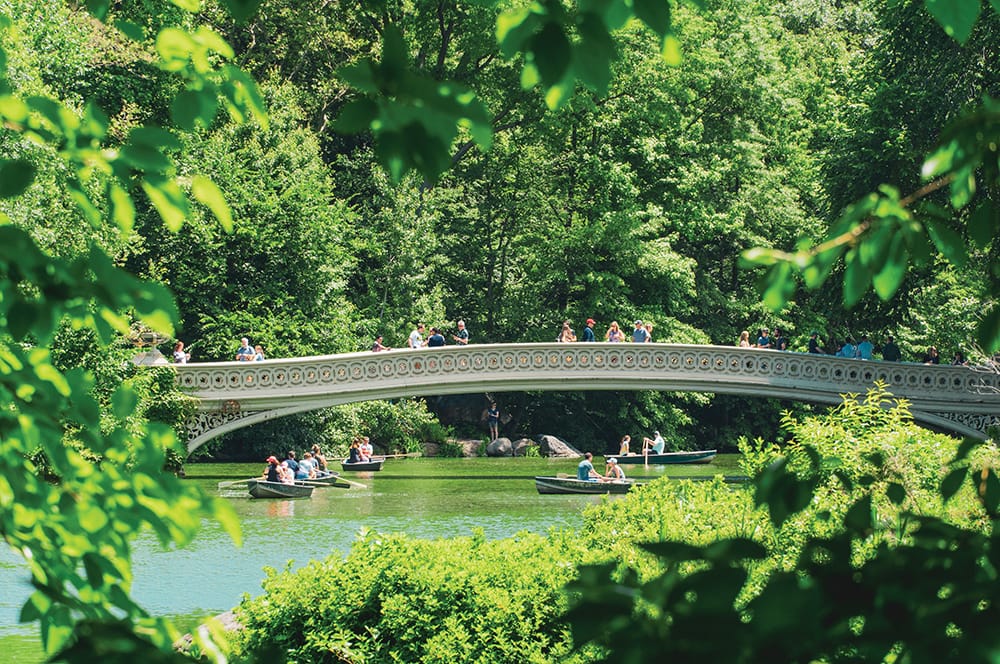
Feeling unhappy? Go find a city park—the bigger the better—and try taking a walk outdoors. That’s the upshot of a major new study that measures the happiness effects of city parks in the 25 largest U.S. cities.
“These new findings underscore just how essential nature is for our mental and physical health,” says University of Vermont scientist Taylor Ricketts, noting that parks are the primary source of nature for millions of people. “These results are especially timely given our increased reliance on urban natural areas during the COVID pandemic.”
The study builds on the team’s landmark San Francisco research, which used unlikely tools—Twitter posts and geolocation data—to create an effective method to quantify the happiness benefit that people get from nature.
Whose parks make them happiest?
Researchers found that U.S. cities differed a lot in the size of the happiness benefit that their parks provided to users:
- Indianapolis
- Austin
- Los Angeles
- Jacksonville
- Chicago
- Dallas
- Memphis
- Denver
- New York
- San Diego
- San Francisco
- Philadelphia
- Phoenix
- San Jose
- Detroit
- Seattle
- San Antonio
- Houston
- Fort Worth
- Washington
- Columbus
- Charlotte
- Boston
- El Paso
- Baltimore
Scientists were surprised by several top ranked cities in the study—including Indianapolis, Austin and Jacksonville—which have lower per capita funding levels for parks compared to some other cities on the list.
A more powerful predictor of happiness than park funding per capita (which previous research by others had suggested would be key) was park size. The happiness benefit was highest in parks over 100 acres in area, followed by parks 1 to 10 acres in size.