

Best Playground Equipment For Children With Autism
Below, occupational therapist and inclusive play specialist Ariel Mansholt, OTD, OTR/L, CPSI, shares guidance on what to look for in outdoor playground equipment when taking a child with autism out to play.
Every child with autism engages with the playground differently. What feels calming and enjoyable for one child may be overwhelming or distressing for another. Thoughtfully designed equipment can support sensory regulation, encourage engagement, and help build important skills through play.
- Symbol Communication Sign: An estimated 40% of individuals with autism are non-verbal communicators. A symbol communication sign provides children the opportunity for a voice to allow them to communicate their wants and needs, and connect with peers while in the play environment.
- Belt Swing: Rhythmic rocking has been shown to send calming signals to the brain. This rocking, or linear vestibular input, is a calming source for many children on the autism spectrum.
- Enclosed or partially enclosed spaces: Features that offer a sense of shelter can help reduce auditory and visual input from a busy playground. These quieter areas can be especially supportive for children who may feel overwhelmed in high-stimulation environments.
- Rocking or swinging elements: Rhythmic, back-and-forth motion (linear vestibular input) can have a calming effect for many children, helping support regulation and body awareness.
- Hammock-style or retreat spaces: Equipment that combines gentle movement with a cozy, contained area can provide both vestibular input and a place to take a break when sensory input becomes too intense.
- Spinning elements (seated): Rotational movement can offer vestibular input for children who seek it, giving them an opportunity to engage with motion in a controlled, seated position.
- Spinning elements (varied positions): Equipment that allows for different body positions—such as sitting or standing—can support autonomy and let children choose how they engage based on their comfort and needs.
- Group spinning or movement activities: Multi-user equipment that involves pushing, pulling, or shared motion can add proprioceptive input while also encouraging social interaction and cooperative play.
- Cause-and-effect play panels: Interactive elements that respond to a child’s actions (e.g., turning, spinning, activating movement) can support engagement, motor planning, and visual tracking through simple, predictable feedback.
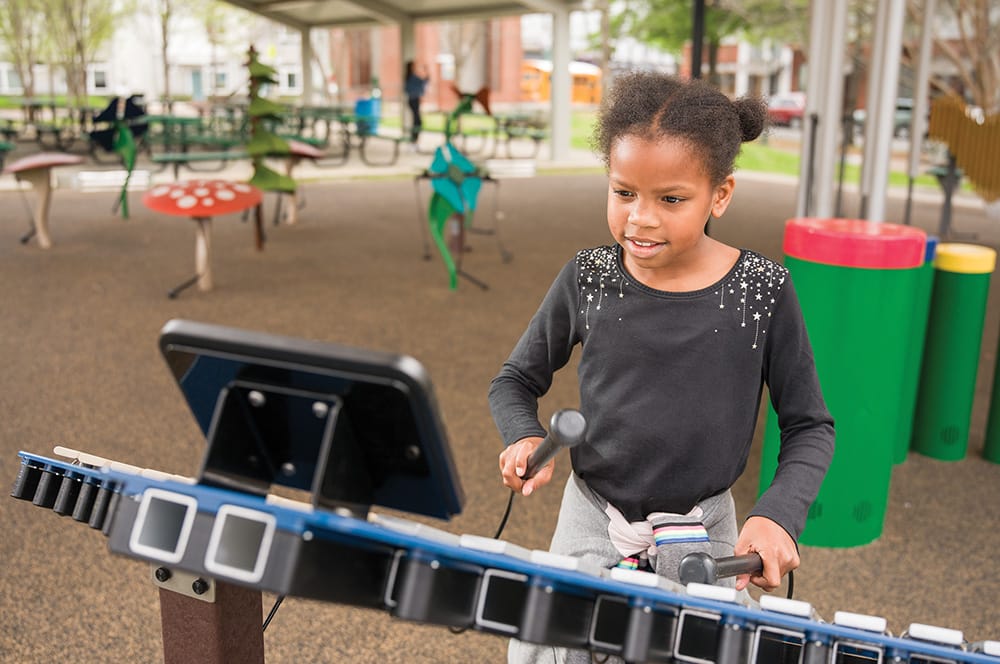
- Musical or sound-making features: Opportunities to create or interact with sound can be regulating for some children, allowing them to explore rhythm and auditory input in a self-directed way.
Freenotes Harmony Park Launches The Harmony Method
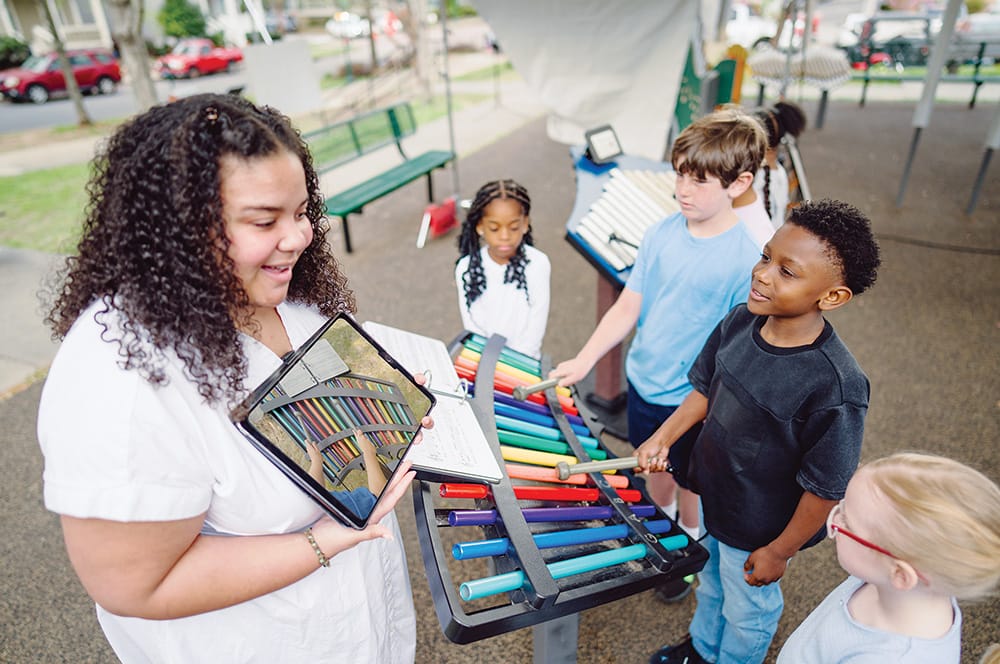
Freenotes Harmony Park has launched The Harmony Method™, a guided music education resource that transforms outdoor musical play into intentional learning experiences. Designed specifically for outdoor musical space by musical experts, the resource gives parks, schools, and communities an education-first framework to support music learning beyond traditional classroom settings.
While musical playgrounds have become increasingly common in public spaces, many lack guidance on how to use them as true learning environments. The Harmony Method™ addresses that gap by offering a clear, structured way to activate outdoor musical spaces with purpose, helping turn informal play into meaningful, shared learning experiences.
“At Freenotes Harmony Park, we have always believed that musical play has the power to connect people,” says Kelly Ellington, Director of Marketing and Product Development at Freenotes Harmony Park. “With The Harmony Method™, we are offering a true education resource that provides a clear and credible way to turn musical play into meaningful learning.”
Music has long been recognized as a powerful tool for learning, connection, and development. By embedding music education into outdoor public spaces, The Harmony Method™ helps make those benefits more accessible, inviting participation from people of different ages, abilities, and backgrounds through shared, hands-on experiences.
The Harmony Method™ is supported by The Harmony Hub, which provides video guidance and facilitation resources that accompany the program. Access to the Harmony Hub is available through QR codes placed directly on Freenotes Harmony Park instruments, enabling guidance in the moment as learning unfolds through play.
Video guidance supports facilitators while keeping learning human-led and grounded in shared play. Developed in partnership with My Music Starts Here, a music education organization founded by educators Mary Anderson and Mike Anderson, the Harmony Method™ reflects a shared commitment to providing high-quality, engaging music experiences that support child development in real-world learning environments.
“Music has a unique ability to support confidence, creativity, and connection,” says Mike Anderson. “The Harmony Method™ meets children where they are through play, while offering a thoughtful, standards-based approach to music learning that works in outdoor spaces.”
Designed to be used again and again with intention, the Harmony Method™ provides a guided, standards-based music education framework that supports inclusion, social connection, and creative expression.
The Harmony Method™ is available for new and existing Freenotes Harmony Park installations.
For more information about The Harmony Method™ or to request resource information, visit: https://thm.freenotesharmonypark.com/theharmonymethod.