
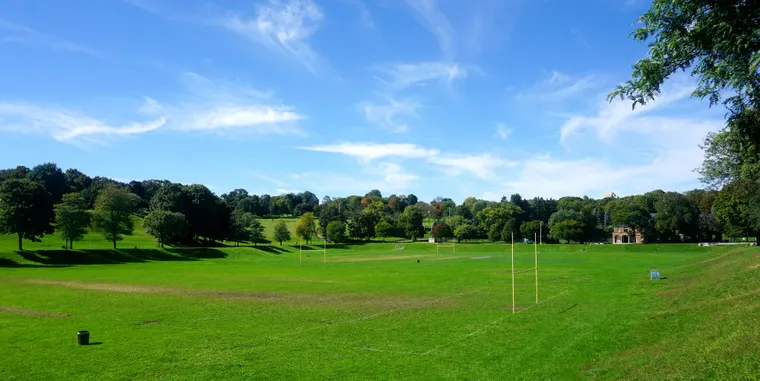
How parks and recreation professionals can spot early warning signs, improve playability, and prevent costly repairs
High-traffic turf areas on sports fields, golf courses, or large public greenspaces are often the first to show signs of stress. Constant foot traffic, maintenance equipment, and repeated play put constant pressure on these surfaces, which can lead to poor drainage. When that happens, the impact goes well beyond appearances. It affects safety, playability, and long-term maintenance costs, often forcing difficult decisions around field closures or costly repairs. The key to avoiding these issues is identifying them long before it gets to that point.
Unfortunately, what makes drainage issues particularly challenging is they rarely begin as obvious failures. Instead, they build gradually beneath the surface. By the time standing water or turf loss becomes visible, the underlying problem has often been building for months or longer. For parks and recreation professionals managing high-use spaces, understanding the early warning signs—and knowing how to act on them—can make the difference between routine maintenance and full-scale reconstruction.