
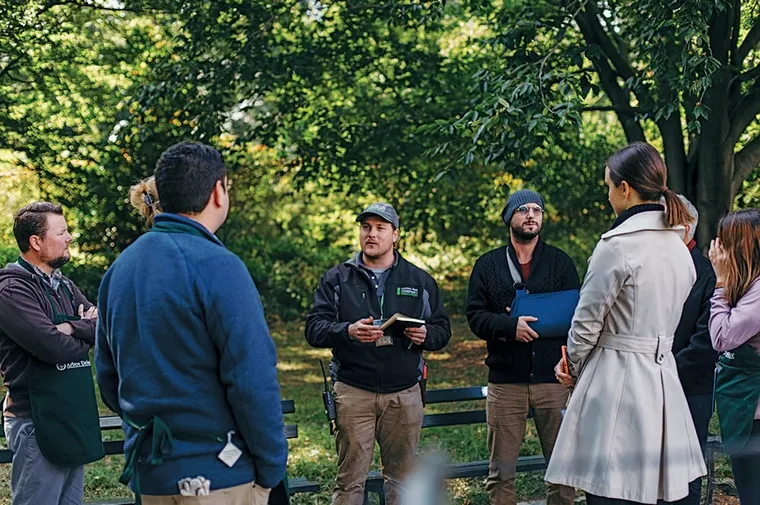
Learn how to organize and maximize a tree board’s effectiveness
By Alana Tucker
Cities are always striving for cleaner air, higher property values, greener parks, and healthier residents. To address these goals, many of the most progressive communities and public park managers turn to trees because of their endless benefits. A more expansive tree canopy lessens pollution, increases property values, enhances well-being, and combats a changing climate. These communities also have a good understanding of the role a tree board plays in creating a greener future and helping reach their goals.
Forming a board or department to care for trees is instrumental in creating greener communities and parks, which is why the Tree City USA program, founded in 1976, made it one of its core standards for recognition. Now, more than 3,600 communities have met this standard, and 74 percent have recorded having a tree board in place. The other 26 percent have a department chair or city manager overseeing the care of trees.
For those with a tree board in place already, continue reading to find more valuable ways to maximize its effectiveness. No tree board in place? Expect to learn how to form one, how it functions, and its overall impact.
About A Tree Board
The term “tree board” is one of several names that communities use to identify a group of individuals tasked with looking after the welfare of trees. Other titles include “tree commission,” “tree committee,” “beautification committee,” and “parks advisory board.” It is important to note that these formal titles differ from nonprofit organizations or volunteer groups that exist outside of city government, though they are still valuable partners for accomplishing city goals for public trees. The benefit of establishing a tree board is that city leaders can hear from ordinary citizens about tree issues in the community and ensure that trees are a priority, not an afterthought.