
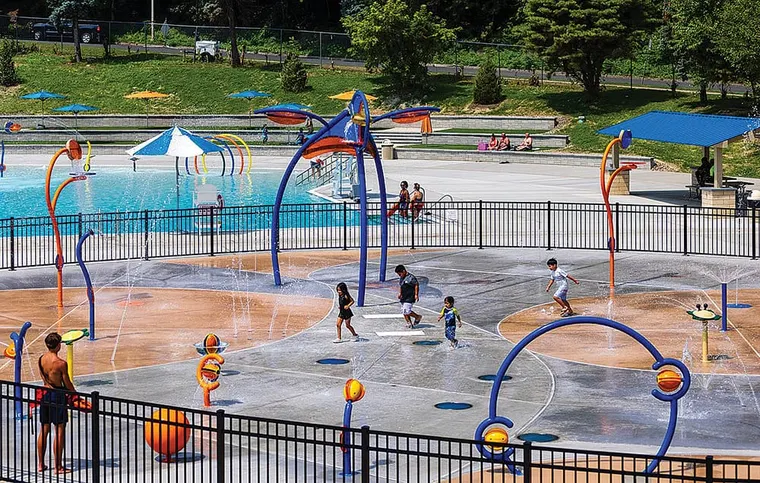
How rain diverters keep splash pads running
It’s a relaxing day in July. The sun is high, the temperature is rising, and a municipal splash pad hums with life. Toddlers chase arcs of water, older kids test which jets spray the highest, and caregivers chat in the shade. Then, the sky shifts and an afternoon shower rolls through with a pop‑up storm—a typical occurrence for the summertime. When the rain eases and families drift back to the play surface, there is debris at the drains, and water chemistry is trending out of range. What had been a carefree day has suddenly become a maintenance scramble for the splash-pad operator.
Splash pads have exploded in popularity recently because they’re inclusive, accessible, and can be a cost‑effective alternative to a pool. However, their design makes them inherently vulnerable to rainfall. In many regions, more frequent and intense precipitation is an emerging reality, and for splash-pad operators, that means that keeping water quality balanced and operations running smoothly takes more than pumps and chemistry—it takes thoughtful rain management.
Rainfall is a wild card for recirculating splash-pad systems. Even a modest shower can overwhelm surfaces and drains and introduce a surge of stormwater into collection points and treatment loops. Here’s what happens behind the scenes:
- Hydraulic overload: Sudden inflows can overwhelm a system that can’t always store the added surge, ultimately directing excess water to waste.
- Contamination at the source: Heavy runoff laden with pollen, organic matter, and fine sediments can further burden the system.
- Chemical imbalance: Organic load and a diluted system demand more oxidant (e.g., chlorine). More chlorine causes pH to drift and the cycle to become cyclical. Operators may need to shock or partially drain the system, leading to additional downtime.
In short, rain doesn’t only make things wet—it destabilizes the carefully controlled equilibrium that keeps splash pads safe, clean, and fun. Even a small, 15‑minute rain event can translate into hours of troubleshooting: cleaning debris screens, rebalancing chemistry, and backwashing filters. For families that planned their day around the splash pad, closures turn into disappointment.