
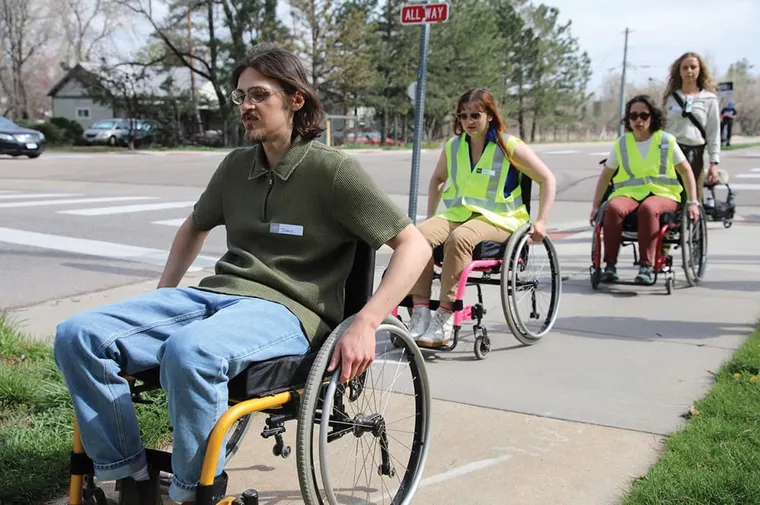
Syncing transportation initiatives and park planning improves access for pedestrians and cyclists
When people describe a task as “a walk in the park,” it’s a way of saying it's easy, straightforward, and pleasant to accomplish. Walking to parks, on the other hand? Those trips can be perilous. Oftentimes, pedestrians must risk crossing busy roads to reach their favorite recreation spaces.
Thankfully, collaborations among advocacy groups, community-based organizations, transportation planners, and parks and recreation departments are paving the way for solutions.
“Everybody deserves to safely, conveniently, joyfully move from place to place and get physical activity as part of their everyday tasks,” says Natasha Riveron, a transportation planner focused on complete streets. Riveron served as Safe Routes Partnership’s senior manager, policy and implementation, before recently joining the Washington State Department of Transportation.
Safe Routes Partnership is a national nonprofit working to advance pedestrian safety in everyday life. The organization’s “Safe Routes to Parks” initiative empowers communities to achieve more equitable streets through research, resources, and technical assistance. In her role there, Riveron promoted proven safety countermeasures (e.g., beacons, bicycle lanes, crosswalk-visibility enhancements, roadway reconfigurations, etc.) to reduce injuries and fatalities. She also saw how engagement with active transportation groups can close gaps in communities struggling with budget constraints and disconnects among city departments.
“The more conversations we have about connectivity into parks, activity, and access, the better the experiences people are going to have,” Riveron says. “Identifying what the community wants, showing that it's supported by design guidance for engineers, and showing success in other places can unlock funding that might not have otherwise seemed available.”