
There are no cookie-cutter answers to understanding and meeting residents’ needs
What are the unique needs of rural areas, and how do park and recreation departments best address them? Agencies like the Los Angeles County Department of Parks and Recreation (DPR) have been seeking answers to these questions. Specifically, DPR has gathered input regarding park-planning efforts from residents in rural communities across the county.
Regional And Rural Edition
One of the planning projects is the 2022 Parks Needs Assessment Plus (PNA+), previously called the Regional and Rural Edition, which is an update to the 2016 Los Angeles Countywide Parks and Recreation Needs Assessment (PNA). This new study, building on the PNA, provides a more in-depth and nuanced understanding of park needs. To address a motion passed by the L.A. County Board of Supervisors in 2019, the PNA+ comprehensively identifies, analyzes, maps, and documents regional facilities and the park needs of rural communities.
Defining Rural Areas
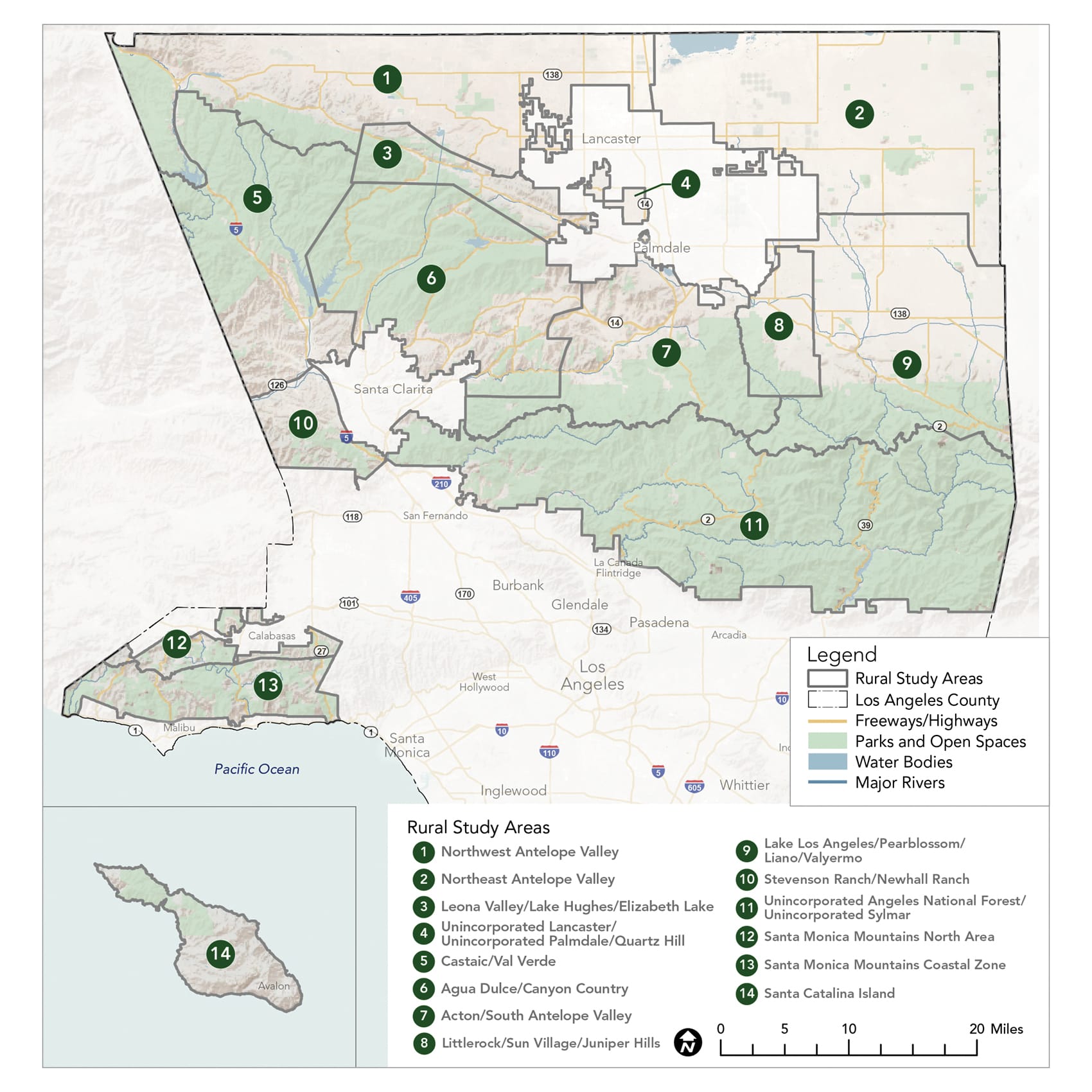
Rural land accounts for about 56 percent of the area of the unincorporated portion of L.A. County. As part of the PNA+, 14 rural study areas were established following an analysis of the PNA study area boundaries, the location and distribution of rural lands, and various planning and zoning documents. These rural areas vary in their demographics, location, topography, history, and park and recreation needs and preferences. Rural communities are found in the Antelope Valley, Santa Clarita Valley, Santa Monica Mountains, and Santa Catalina Island.