
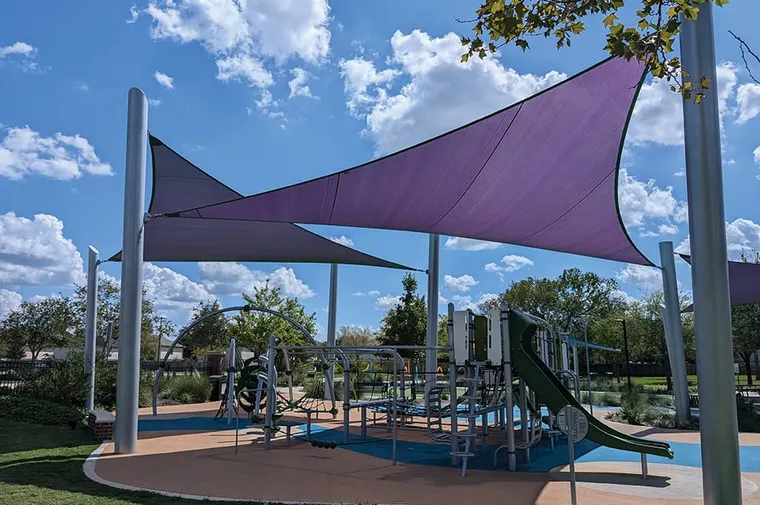
For lasting, well-used facilities, plan for shade from the start
After 22 years of working with architects, landscape architects, and facility planners across the country, I've watched shade evolve from an amenity to core infrastructure. But here's what keeps me up at night: many outdoor spaces are still being constructed as if climate patterns haven't significantly changed. We're building community playgrounds, athletic courts, amphitheaters, and plazas that will be unusable for large portions of a day, a season, or even a year. Investments in outdoor spaces that should serve a community’s health and well-being become unprogrammable or even liabilities the moment temperatures spike. This is no longer happening in only “traditional” summer months, but can be experienced in nearly every season.
Statistics show that more than 700 people die from extreme heat annually in the United States, with fatalities increasing 117% in the last 7 years alone. Heat-related, emergency department visits continue to climb year after year, with children, older adults, pregnant individuals, and those with chronic conditions facing the greatest risk. Marginalized and lower-income communities are also impacted by heat inequity.
We're at an inflection point. The design and budget decisions we make today determine whether our outdoor spaces remain functional through 2050 and beyond, or whether they become expensive monuments to a climate that no longer exists.
From Afterthought To Foundation
Walk through any community park on a summer afternoon, and you'll see the cost of treating shade as an add-on. Playgrounds sit empty during the hottest part of the day. Caregivers crowd into slivers of shade, trying to supervise children in full sun. Amenities that require millions in capital investment sit dormant because they're too uncomfortable to enjoy.
These vibrant, outdoor environments are unintentionally limited in their usability. The impact goes beyond discomfort to financial loss from lost programming revenue, reduced community engagement, and mounting liability exposure.
When shade enters the conversation late in design, budget constraints often force compromises on coverage, and construction complexity increases when structures must be retrofitted around completed site work. Opportunities for seamless integration vanish. Thus, shade looks and functions like an afterthought, because it was one.